


- 18th Aug '26
- Sell SaaS
- 9 minutes read
3 Merchant of Record Options for Selling Software Worldwide
Selling software globally sounds good until you realize you're suddenly responsible for VAT in Germany, GST in Australia, and sales tax across 50 U.S. states. Merchant of Record options exist to solve exactly that problem, taking on the legal and financial liability so you don't have to. Managing chargebacks, staying ahead of payment disputes, and maintaining high payment authorization rates across regions gets complicated fast. After reviewing the leading platforms in this space, this guide covers three options worth considering for any software seller going global.
How the picks were chosen
Each option was assessed using publicly available information, including feature breakdowns on official websites, case studies, and reviews across review directories. Only platforms with a demonstrated track record in ecommerce and digital product sales made the cut.
→ See the full research breakdown
-
Fungies.io - Best for game publishers, SaaS founders, and indie developers selling directly to customers
-
Dodo Payments - Best for SaaS and AI builders needing global monetization infrastructure
-
Lemon Squeezy - Best for digital product sales and software licensing at scale
Why Merchant Of Record Options Are Worth the Investment
Picking the wrong payment and compliance setup can quietly drain revenue before you notice.
When you're selling software across borders, tax compliance across jurisdictions isn't optional. Missing a VAT filing or miscalculating GST can mean penalties and clawbacks that hurt more than any transaction fee ever would.
Handling chargebacks and payment disputes without assuming full financial liability is another real pressure point. Every disputed charge managed poorly chips away at your payment authorization rate and your margins.
The right Merchant of Record partner takes that liability off your plate entirely. That shift typically shows up in better chargeback ratios, faster dispute resolution, and stronger tax remittance accuracy across jurisdictions. And that kind of consistency is rare for teams trying to manage compliance in-house.
Merchant Of Record Options Comparison Table
Note: All data in this table is sourced from review platforms and the official websites of the listed companies.
| Company Name | Years Operating | Team Size | Headquartered In |
| Fungies.io | Since 2022 | 5 | Palo Alto, California |
| Dodo Payments | Since 2024 | 62 | Dover, DE |
| Lemon Squeezy | Since 2020 | 10 | Salt Lake City, Utah |
-
Fungies.io - Best for Direct-to-Consumer Software Sales Without Platform Fees
What Purpose Does Fungies.io Serve?
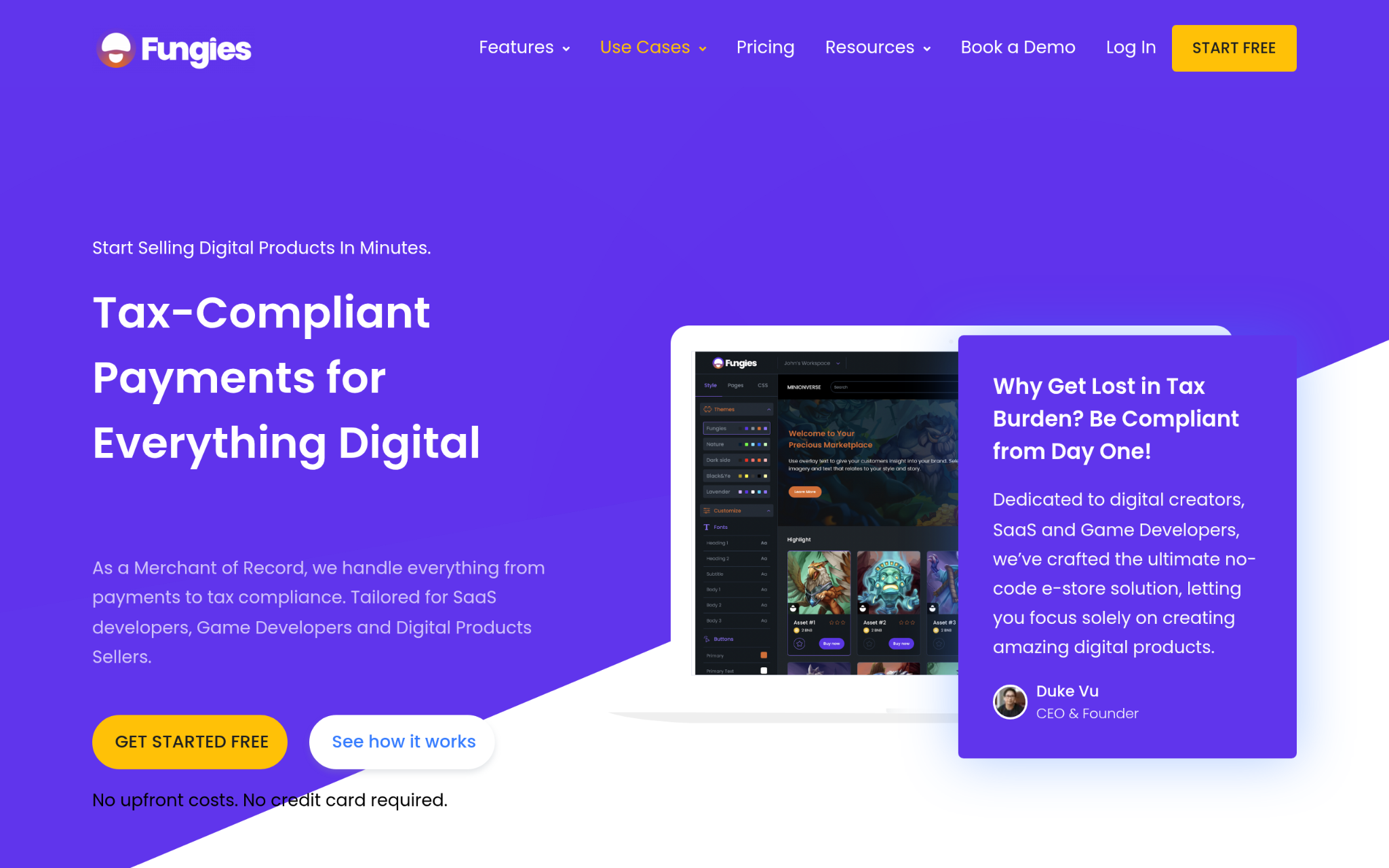
Fungies.io is a Merchant of Record platform for SaaS companies and digital businesses that want to sell digital goods and subscriptions directly to their customers globally. The platform acts as the legal seller of record, handling VAT and GST collection, sales tax compliance, fraud prevention, refunds, and chargeback management. The commission-only pricing (5% plus 50¢ per transaction) means no upfront costs or monthly fees, which makes it genuinely accessible for companies that can't justify heavy platform overhead.
Why Pick Fungies.io for Merchant Of Record Options?
Fungies.io directly handles global tax compliance across jurisdictions without requiring any in-house legal setup. For SaaS and digital businesses that want to combine checkout, subscription billing, and tax compliance in one platform and still stay fully compliant, that combination is hard to match.
The Review Roundup:
Customers point to fast setup, responsive support, and easy API and webhook integrations as consistent strengths. Clients featured include Leadsin.io, Freevocals.com, TextToVideo.bot, and RenderAI.app, suggesting the platform holds up well for companies scaling their global sales.
-
Dodo Payments - Best for SaaS and AI Builders Needing Unified Global Monetization
What Purpose Does Dodo Payments Serve?
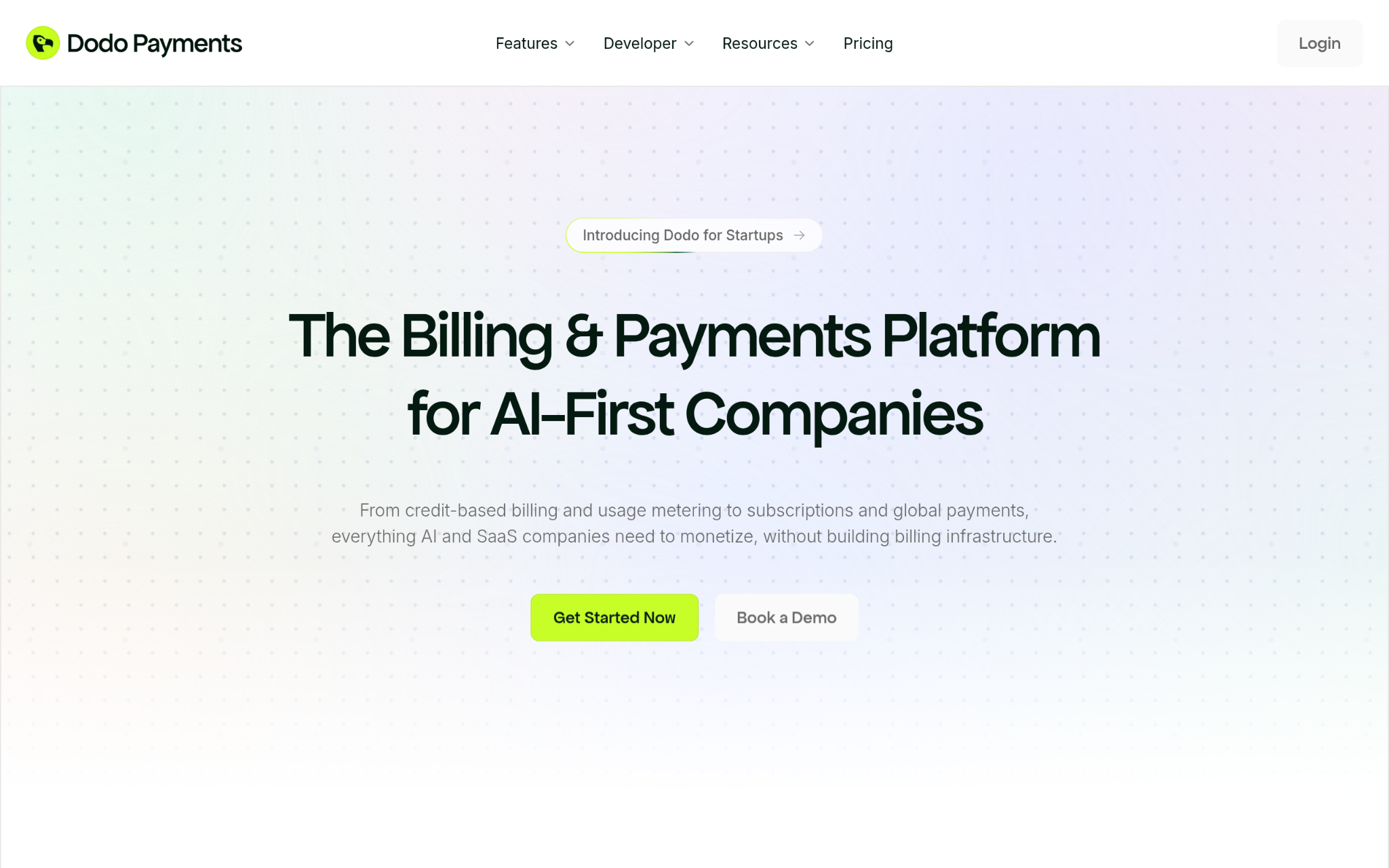
Dodo Payments is a unified monetization platform built for SaaS and AI product teams. They support 150+ countries and 40+ payment methods, covering everything from credit-based and usage-based billing to subscriptions and one-time payments. As a Merchant of Record, they take on global tax compliance, fraud protection, and chargeback management. The platform also includes Sentra, an AI assistant built into VS Code that lets developers wire up billing directly inside their existing workflow (not cheap, but thoughtful engineering).
Why Pick Dodo Payments for Merchant Of Record Options?
Teams building AI products or micro-SaaS tools often struggle with fragmented payment stacks that slow down payment setup and complicate tax remittance across jurisdictions. Dodo Payments pulls payments, billing, and distribution into one layer, which cuts down the friction that typically slows global launches.
The Review Roundup:
Dodo Payments launched in 2024, so public review volume is still building. The $1.1M pre-seed backing from tier-one investors signals strong early market validation. And the VS Code integration stands out as a real differentiator compared to platforms that expect developers to adapt to their tools rather than the other way around.
-
Lemon Squeezy - Best for Digital Product Sellers Who Need Simple Global Licensing
What Purpose Does Lemon Squeezy Serve?
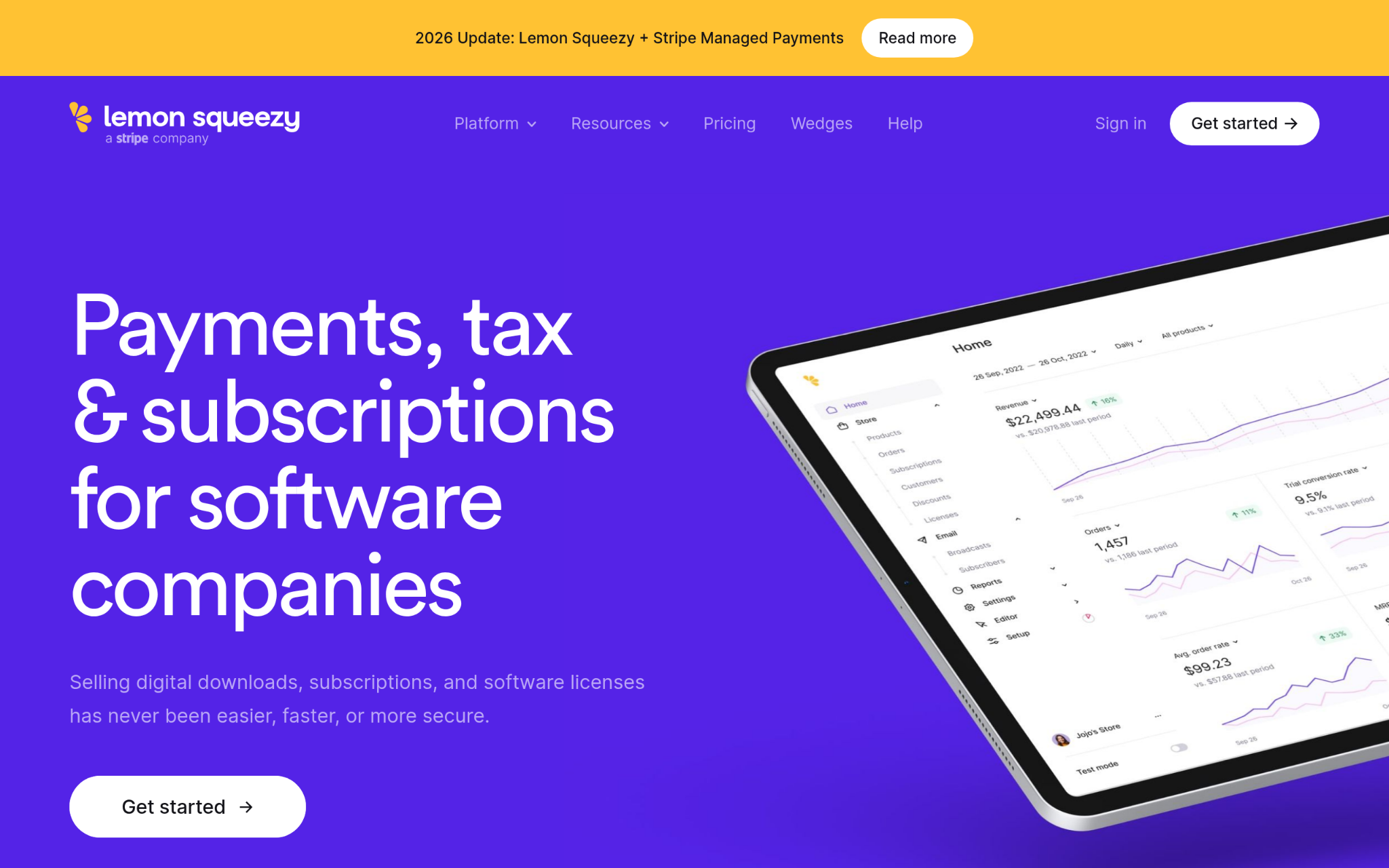
Lemon Squeezy is a payment and compliance platform built for software companies and digital product sellers. They handle payment processing, subscription billing, tax collection (including EU VAT compliance), fraud prevention, and license key management, all under one roof. The platform supports 200+ countries and 130+ currencies, and pays out twice monthly via bank wire or PayPal. Stripe's acquisition of the company in July 2024 adds a layer of infrastructure credibility that solo sellers and growing startups will appreciate (think enterprise-grade reliability at indie pricing).
Why Pick Lemon Squeezy for Merchant Of Record Options?
Software sellers dealing with license key management alongside payment and tax obligations usually have to stitch together multiple tools, which creates gaps in chargeback management and compliance tracking. Lemon Squeezy packages all of that into a single Merchant of Record setup, which keeps checkout completion rates cleaner and compliance tighter.
The Review Roundup:
Lemon Squeezy hit $1M in annual recurring revenue within its first nine months, which tells you something real about how it landed with the market. Thousands of startups and digital creators actively use it, and reviews consistently call out the ease of tax handling and the global reach as top reasons for staying on the platform. The Stripe acquisition only strengthened confidence among existing users.
Selection Framework: How Each Pick Was Evaluated
The research behind this list started with a broad sweep of Merchant of Record platforms actively used by software sellers, digital product teams, and SaaS operators.
What Data Should Be Collected First
The longlist was built by pulling from multiple sources: software directories, SaaS-focused review platforms, community discussions, and case studies published by the platforms themselves. The goal was to capture any platform with a documented presence in the Merchant of Record space, not just the ones with the most ad spend. That meant going beyond the first page of search results and cross-referencing which platforms kept coming up organically across independent communities and developer forums.
Filtering Candidates to Your Main Requirements
From that initial pool, options without verifiable real-world usage were removed. Platforms that couldn't point to actual merchants using their service, or where review patterns showed thin or suspiciously uniform feedback, were cut from consideration. The filtering process looked for consistency across review sources rather than relying on any single platform's rating. Patterns in what users praised and what they flagged mattered more than star counts.
Claims Are Fact-Checked Against Reliable Sources
Every feature claim made on a company's website was checked against what real users described in reviews and public discussions. Where a platform claimed specific country coverage or supported payment methods, those claims were cross-referenced with user-reported experiences. Discrepancies between marketing copy and actual merchant feedback were flagged and factored into the evaluation. This step caught several cases where headline numbers didn't match the practical reality described by merchants.
Industry Standing Check
Each company was reviewed for signals of broader recognition in the industry, including mentions in founder communities, coverage in relevant publications, and partnerships or funding milestones that reflected third-party confidence in the platform. Dodo Payments' pre-seed funding and Lemon Squeezy's Stripe acquisition both work as external validation points that go beyond what any company can say about itself. That kind of third-party signal carries real weight when evaluating newer entrants.
Real-World Merchant Of Record Options Evidence
The final check focused on concrete evidence of Merchant of Record activity: dedicated service pages covering tax remittance, chargeback management, and fraud protection; verified reviews from merchants describing actual compliance outcomes; and case studies showing measurable results. Fungies.io's Findgu case study and Lemon Squeezy's ARR growth are examples of the kind of real-world evidence that moved platforms from "interesting option" to "worth recommending." Generic feature lists without user validation didn't make the cut.
Choosing the Right Merchant Of Record Options: A Quick Guide
Not every Merchant of Record platform fits every software business. The right choice depends on your product type, your target markets, and how much compliance work you're actually dealing with. Here's what to weigh before committing.
-
Industry/Domain Experience: Look for platforms with proven experience in your category, whether that's SaaS subscriptions, digital downloads, or AI tooling. A platform built for physical goods won't handle license key management or usage-based billing the same way.
-
Features and Service: Confirm that chargeback management, VAT/GST collection, and fraud prevention are all included, not bolted on as paid extras. The fuller the base offering, the fewer gaps you'll need to patch with other tools.
-
Pricing Structure: Commission-only models (like the 5% plus 50¢ structure used by Fungies.io and Lemon Squeezy) work well at lower volumes. As transaction volume grows, compare total cost against what you're getting in compliance coverage.
-
Results Measurement: Ask how the platform reports on payment authorization rates, chargeback ratios, and payout timelines. Platforms that surface this data clearly make it easier to spot problems early.
-
Industry Knowledge and Compliance: Tax compliance across jurisdictions changes constantly. Confirm that the platform actively updates its compliance coverage and communicates those changes to merchants.
Wrapping Up
Choosing the right Merchant of Record setup is one of the more consequential decisions a software business makes when going global.
The three platforms covered here each take a different approach: Fungies.io for lean direct-to-consumer selling, Dodo Payments for developer-first SaaS and AI monetization, and Lemon Squeezy for software sellers who need licensing built in.
As cross-border software sales keep growing, the demand for platforms that handle tax remittance accuracy and chargeback management without friction will only increase. Getting the fit right now makes scaling later a lot cleaner.