


- Sell SaaS
- /
- ब्लॉग
- /
- How to Sell SaaS Products Without Customer Support Burden: A Comprehensive Guide
- 16th Nov '26
- Sell SaaS
- 23 minutes read
How to Sell SaaS Products Without Customer Support Burden: A Comprehensive Guide
Launching a successful SaaS business without being overwhelmed by customer support demands is a challenge many entrepreneurs face. This comprehensive guide from Sell SaaS explores the essential strategies and models that allow businesses to thrive while minimizing the support burden. Readers will learn about the significance of SaaS sales, the common challenges in customer support, and how self-service sales models and automation can streamline customer interactions. The article also compares traditional and self-service approaches, highlights the advantages of leveraging marketplaces, and shares best practices for reducing support needs. By understanding customer lifetime value and future trends, aspiring SaaS entrepreneurs will gain valuable insights into optimizing their sales processes and building a sustainable business. This guide is a must-read for those looking to enter the tech industry with minimal technical expertise and upfront investment.
Understanding SaaS Sales and Its Importance
Definition of SaaS Sales
SaaS sales involves the process of selling web-based software. This model allows service providers to host applications at a data center, enabling customers to access these applications via the Internet. This method not only reduces the cost for clients by eliminating the need for maintaining hardware but also provides providers with a consistent stream of subscription revenue. The SaaS sales cycle shares stages with other sales cycles but can be longer, particularly for high-value transactions. This extended cycle requires sales teams to be adept at pitching and demonstrating technical products while focusing on customer retention and upselling.
Importance of SaaS in the Software Market
The significance of SaaS in the software market is undeniable. As businesses increasingly shift towards digital solutions, SaaS offers a scalable, cost-effective alternative to traditional software. This model supports horizontal scaling, allowing companies to adjust resources according to demand without significant upfront investments. For entrepreneurs looking to sell SaaS products without customer support burden, platforms that provide ready-to-sell solutions are invaluable. They empower individuals to launch their own SaaS businesses with minimal technical expertise, thus democratizing access to the tech industry.
For further insights into the SaaS sales process, including detailed stages and strategies, you can explore more on this resource.
As we delve into the challenges of customer support in SaaS sales, it's essential to recognise how these obstacles can impact the overall sales process and customer experience.
Challenges of Customer Support in SaaS Sales
Common Challenges Faced in Customer Support
Customer support in the SaaS industry often encounters several recurring challenges. One of the most significant issues is the complexity of the software itself. SaaS products, being cloud-based, can involve intricate setups and integrations that require extensive knowledge to troubleshoot. This complexity often leads to longer resolution times, which can frustrate customers and increase churn rates.
Another common challenge is the need for support teams to be available across multiple time zones. SaaS products are typically used globally, which means support must be adaptable to different regions and languages. This requirement can strain resources and lead to inefficiencies if not managed properly. Additionally, the rapid pace of technological advancements means that support teams must continuously update their knowledge to keep up with new features and updates, adding to the workload.
Impact of Support Burden on SaaS Businesses
The burden of customer support can have a profound impact on SaaS businesses. High support demands can lead to increased operational costs, as companies may need to hire more staff or invest in advanced support technologies. This can be particularly challenging for smaller businesses with limited budgets.
Moreover, a heavy support burden can divert resources away from other critical areas such as product development and marketing. When too much focus is placed on resolving customer issues, it can stifle innovation and slow down the growth of the business. In the competitive SaaS market, where differentiation is key, this can be a significant disadvantage.
Ultimately, the success of a SaaS company is closely tied to its ability to manage customer support effectively. By understanding and addressing these challenges, businesses can improve their customer satisfaction rates and enhance their overall market position.
Having explored the challenges of customer support in SaaS sales, it is essential to consider effective strategies that can help mitigate this burden while still achieving sales success.
Strategies to Sell SaaS Products Without Customer Support Burden
Overview of Effective Strategies
To successfully sell SaaS products without customer support burden, businesses must implement strategies that streamline the sales process and minimize the need for extensive support. One effective approach is to enhance the self-service capabilities of the product. By providing comprehensive onboarding materials, tutorials, and FAQs, customers can resolve common issues independently, reducing the demand on support teams. This not only empowers users but also allows businesses to allocate resources more efficiently.
Another strategy involves leveraging automation tools to handle repetitive support tasks. Automated chatbots and AI-driven support systems can address basic queries and guide users through troubleshooting steps. This technology ensures that customers receive immediate assistance, enhancing their experience while freeing up human agents to focus on more complex issues. By integrating these tools, companies can maintain high levels of customer satisfaction without overburdening their support teams.
Importance of Reducing Support Burden
Reducing the support burden is crucial for SaaS businesses aiming to scale effectively. A high volume of support requests can overwhelm teams, leading to delays and decreased customer satisfaction. By minimizing the need for direct support interactions, companies can improve operational efficiency and focus on product development and innovation.
Moreover, a reduced support burden allows businesses to allocate resources towards proactive customer engagement. This can include personalized outreach to guide users in maximizing product value or collecting feedback for future improvements. Ultimately, these efforts contribute to a more sustainable growth model, where customer satisfaction is achieved through efficient and scalable support solutions.
| Strategy | Description | Benefits |
|---|---|---|
| Self-Service Resources | Provide tutorials, FAQs, and guides | Empowers users, reduces support demand |
| Automation Tools | Use chatbots and AI for basic queries | Immediate assistance, frees up human resources |

Self-Service Sales Models in SaaS
Understanding Self-Service Sales in SaaS
Self-service sales models in the SaaS industry allow customers to explore, evaluate, and purchase software without direct interaction with sales representatives. This approach is particularly effective for intuitive software solutions where users can easily onboard themselves. Products like basic cloud accounting or invoicing tools often fit this model, as they require minimal training and investment. The self-service model empowers customers to make purchasing decisions independently, with sales teams stepping in only when necessary to answer specific questions or to offer additional services.
By minimizing the need for extensive customer support, SaaS companies can streamline their sales processes and focus resources on product development and innovation. This model not only reduces operational costs but also enhances the customer experience by providing immediate access to software solutions.
Benefits of Self-Service for SaaS Companies
Implementing a self-service sales model offers numerous advantages for SaaS companies. Primarily, it reduces the burden on customer support teams, allowing them to focus on complex queries and customer retention strategies. This model also accelerates the sales cycle, as customers can quickly access and evaluate the software without waiting for sales interactions. Additionally, self-service sales cater to the growing demand for digital autonomy, where 84% of buyers expect SaaS providers to understand and demonstrate the impact of AI and Machine Learning on their products.
For SaaS businesses, adopting self-service sales models can lead to increased scalability. As the sales process becomes more automated, companies can handle a larger volume of transactions without proportionally increasing their workforce. This scalability is crucial in the competitive SaaS market, where the ability to grow rapidly and efficiently can be a significant advantage.
For more insights into the SaaS sales process, explore the detailed analysis available at SaaS sales strategies.
Automating Customer Interactions in SaaS
Tools and Technologies for Automation
Automation in customer interactions has become a cornerstone for SaaS businesses aiming to streamline operations and reduce the support burden. Various tools and technologies are available to facilitate this process. Chatbots, for example, are commonly used to provide instant responses to customer queries, handling basic questions and freeing up human agents for more complex issues. Additionally, customer relationship management (CRM) systems with integrated automation features can track customer interactions and automatically send follow-up emails or notifications.
Moreover, AI-driven analytics platforms can predict customer needs and offer proactive support, enhancing user satisfaction. These tools often come with customizable templates and workflows that can be tailored to fit specific business needs. The pricing for these tools varies widely, with some offering tiered pricing structures, while others may have pricing unclear until consultation. Leveraging these technologies not only improves efficiency but also enhances the overall customer experience.
Benefits of Automation in Reducing Support Needs
Implementing automation in customer interactions significantly reduces the need for extensive customer support teams. By automating routine tasks, SaaS companies can minimize the time and resources spent on repetitive inquiries. This allows support teams to focus on more strategic tasks, such as improving customer retention and upselling.
Automation also leads to faster response times, which is crucial in maintaining customer satisfaction. Customers today expect quick and efficient service, and automated systems can provide that without the delays associated with human interaction. Furthermore, automation reduces the risk of human error, ensuring consistent and accurate information delivery. As a result, businesses can maintain high service standards while managing costs effectively.
Core Points to Know
Understanding the SaaS sales cycle is essential for effectively implementing automation. The sales cycle in SaaS is generally longer due to the complexity and cost of the products involved. This extended cycle provides ample opportunity to integrate automated solutions at various stages, from lead generation to post-purchase support. By doing so, businesses can enhance their scalability and responsiveness.
Moreover, with the increasing share of SaaS in the enterprise software market, the demand for efficient customer interaction strategies is higher than ever. Automation not only meets this demand but also positions SaaS companies to better handle the evolving expectations of their clients. For more insights on the SaaS sales process, you can explore the SaaS Sales: A Complete 2026 Guide + 5 Effective Strategies.
Comparison of Self-Service and Traditional Sales Approaches
Key Differences Between Self-Service and Traditional Sales
The self-service sales model and traditional sales approach differ significantly in execution and customer interaction. In a self-service model, customers can independently explore, trial, and purchase SaaS products without direct involvement from sales representatives. This model is particularly effective for straightforward products like Mailchimp or QuickBooks Online, where minimal setup or training is required. Customers can access resources such as tutorials or FAQs to support their journey.
Conversely, the traditional sales approach involves a more hands-on process with sales representatives guiding potential customers through the buying cycle. This approach is often necessary for complex or high-value SaaS solutions where personalized demos, negotiations, and relationship-building are critical. The traditional method is typically used for products with longer sales cycles, necessitating a more involved sales strategy.
Pros and Cons of Each Approach
Both sales approaches offer distinct advantages and disadvantages. The self-service model is cost-effective, allowing businesses to scale horizontally by reaching a wider market without significantly increasing sales staff. It also provides customers with the flexibility to explore products at their own pace, which can enhance user satisfaction for simple solutions. However, it may not be suitable for complex products that require detailed explanations or customization.
On the other hand, the traditional sales approach provides a personalized experience that can be crucial for closing deals on complex SaaS products. This model can build stronger customer relationships and increase the likelihood of upselling and cross-selling. The downside is that it often requires a larger investment in sales personnel and resources, which can increase operational costs.
| Aspect | Self-Service | Traditional Sales |
|---|---|---|
| Customer Interaction | Minimal | High |
| Cost Efficiency | High | Varies |
| Scalability | High | Moderate |
| Product Complexity | Simple | Complex |
- Self-service is ideal for simple, intuitive SaaS products.
- Traditional sales are better suited for complex or high-value products.
- Consider customer needs and product complexity when choosing a sales model.
Leveraging Marketplaces for SaaS Sales
Benefits of Utilizing Marketplaces
Leveraging resale marketplaces provides SaaS businesses with instant access to a large, pre-built audience actively seeking technology solutions. This approach can significantly reduce the time and resources typically spent on customer acquisition. By tapping into these platforms, we can reach potential customers who are already in the mindset to purchase, thus streamlining the sales process.
Moreover, marketplaces often handle aspects such as billing, distribution, and even some level of customer support. This means that our team can focus more on product development and marketing strategies rather than the logistical challenges of individual sales. Additionally, these platforms frequently offer analytics tools to help track performance and optimize sales strategies.
Examples of Successful SaaS Marketplaces
Several marketplaces have proven successful for SaaS products, offering diverse options to suit different business models. For instance, platforms that provide marketplace syndication can expand our reach by distributing products through multiple partner marketplaces. This syndication allows us to tap into various customer bases without the need for extensive marketing campaigns.
Some well-known examples include platforms that cater specifically to B2B SaaS solutions, where the focus is on providing comprehensive services that facilitate business operations. These platforms not only enhance visibility but also foster trust among potential clients due to their established reputations.
Maximizing Reach Through Marketplace Syndication
Marketplace syndication is a powerful strategy that enables SaaS businesses to distribute their products across multiple partner platforms. This approach broadens the potential customer base and ensures that products are visible to a wider audience. By utilizing syndication, we can effectively scale our operations horizontally, reaching customers who might not have encountered our products otherwise.
To implement this strategy effectively, consider the following steps:
- Identify marketplaces that align with your product offerings.
- Utilize analytics to track performance across different platforms.
- Adjust marketing strategies based on marketplace feedback and sales data.
By adopting these practices, SaaS businesses can enhance their market presence and drive sales growth without the burden of extensive customer support.
For more insights on how to optimize SaaS sales through strategic marketplace use, explore the detailed strategies discussed here.

Best Practices for Reducing Customer Support Needs
Tips for Minimizing Customer Support
Reducing the need for customer support in SaaS products can significantly enhance operational efficiency and customer satisfaction. One effective method is to implement an intuitive user interface that minimizes confusion and errors. A well-designed interface should guide users naturally through the software, reducing the need for assistance. Additionally, providing comprehensive self-service resources, such as FAQs, tutorials, and video guides, empowers users to resolve issues independently.
Automation is another key strategy. By automating routine support tasks, such as password resets or account management, companies can decrease the volume of support requests. This not only reduces the workload on support teams but also accelerates response times, enhancing the overall user experience. Furthermore, integrating AI-driven chatbots can provide instant support for common queries, allowing human agents to focus on more complex issues.
Examples of Effective Practices
Several companies have successfully reduced their customer support burden by adopting horizontal scaling strategies. This approach allows them to leverage existing resources across a broader market, thereby optimizing support operations. For instance, by using a dedicated marketplace, companies can maintain control over branding and customer interactions, leading to fewer support issues related to third-party platforms.
Another effective practice is the use of resale marketplaces. These platforms offer access to a large, pre-built audience actively seeking technology solutions, which can lead to a more informed customer base and fewer support inquiries. By ensuring that the product information is clear and comprehensive on these platforms, companies can further minimize the need for additional customer support.
| Practice | Benefit |
|---|---|
| Intuitive User Interface | Reduces user errors and support requests |
| Self-Service Resources | Empowers users to resolve issues independently |
| Automation | Decreases routine support tasks |
| Resale Marketplaces | Access to informed customer base |
- Implement intuitive design to guide users naturally.
- Provide comprehensive self-service resources.
- Automate routine support tasks to improve efficiency.
- Utilize resale marketplaces for a pre-informed audience.
Practical SMB Setups
Real-World SaaS Company Examples
In the realm of SaaS, companies have adopted various strategies to manage customer support effectively while maintaining growth. One notable example is a company that leverages horizontal scaling to maximize its existing resources. By expanding its reach across multiple markets without significant changes to its core offerings, the company can tap into a broader customer base. This strategy not only increases revenue potential but also helps distribute the customer support load more evenly, reducing the pressure on any single team.
Another successful SaaS company has created a dedicated marketplace for its products. This approach allows the company to maintain complete control over branding and customer experience. By directing customers to a centralized platform, they streamline the support process, ensuring that users have access to consistent and high-quality assistance. This setup also enables the company to gather valuable data on customer interactions, which can be used to further refine support strategies and product offerings.
Analysis of Support Strategies
Effective support strategies in SaaS often revolve around proactive measures and automation. Companies that implement automated support systems can significantly reduce the burden on human agents. These systems handle common inquiries and provide instant responses to frequently asked questions, allowing support teams to focus on more complex issues that require a personal touch.
Furthermore, some SaaS companies partner with resale marketplaces to reach a larger audience. These platforms offer instant access to a pre-built customer base actively seeking technology solutions. By leveraging these marketplaces, companies can expand their reach without the need to significantly increase their support resources. This approach also allows them to gather insights from a diverse range of customers, which can be invaluable in refining their support processes and enhancing overall customer satisfaction.
The Role of Customer Lifetime Value in SaaS Sales
Understanding Customer Lifetime Value
Customer Lifetime Value (CLTV) is a critical metric in the SaaS industry, representing the total revenue a business can expect from a single customer account throughout its relationship. Calculating CLTV involves multiplying the average purchase value by the average number of purchases over a specific period. This metric provides insights into how valuable a customer is to the business over time, which is especially significant in subscription-based models like SaaS.
By understanding CLTV, companies can better strategize their marketing and sales efforts to maximize revenue from existing customers. This is crucial for businesses looking to sell SaaS products without customer support burden, as it helps identify the most profitable customer segments and tailor strategies accordingly.
Importance of CLTV in SaaS Sales Strategy
In the SaaS sales model, where recurring revenue is the norm, CLTV is ideal for measuring the success of subscription selling. A high CLTV indicates a strong customer relationship, often resulting from effective customer engagement and satisfaction strategies. Conversely, a low CLTV suggests potential issues with customer retention or product value perception.
Focusing on increasing CLTV can lead to significant benefits for SaaS companies. It helps determine whether to invest more in customer acquisition or retention strategies. For instance, if CLTV is low, businesses might need to enhance their product offerings or customer service to improve retention rates. Conversely, a high CLTV might encourage further investment in acquiring similar high-value customers.
To boost CLTV, companies can implement strategies such as:
- Providing comprehensive product education to enhance customer understanding and usage.
- Targeting potential leads for higher-tier subscription plans.
By leveraging CLTV effectively, SaaS businesses can optimize their sales strategies, ensuring sustainable growth and profitability in the long run.
As the landscape of SaaS sales evolves, understanding future trends becomes essential for adapting strategies that minimize customer support burdens while maximizing sales potential.
Future Trends in SaaS Sales and Support
Emerging Trends in SaaS Sales
The SaaS industry continues to evolve rapidly, with several emerging trends reshaping how sales are conducted. One significant trend is the increasing preference for self-service sales models. This approach allows customers to explore and purchase SaaS products with minimal interaction from sales representatives. This shift is driven by the desire for efficiency and the ability to cater to a global audience without the constraints of time zones or availability.
Another trend is the growing importance of demonstrating the impact of AI and Machine Learning within SaaS offerings. With 84% of buyers expecting SaaS companies to showcase these technologies' potential, businesses must integrate AI-driven features that enhance user experience and streamline operations. This not only differentiates products in a crowded market but also aligns with the increasing demand for intelligent solutions.
Impact of Technology on Customer Support
Technological advancements are significantly transforming customer support in the SaaS sector. The integration of AI and automation in support processes is reducing the need for extensive human intervention. Automated chatbots and virtual assistants are now capable of handling routine inquiries, allowing support teams to focus on more complex customer issues.
Moreover, cloud-based solutions are enabling seamless, real-time communication across various platforms, enhancing the overall customer support experience. This technology ensures that support is not only efficient but also scalable, catering to the growing user base without compromising on quality. As these technologies continue to advance, we anticipate a further reduction in the customer support burden, allowing SaaS companies to allocate resources more strategically.
Conclusion and Next Steps for SaaS Entrepreneurs
Summary of Key Takeaways
As we have explored, selling SaaS products effectively hinges on understanding the unique dynamics of the SaaS sales cycle. This cycle typically involves longer timelines due to the complexity and cost of the products. Entrepreneurs must be prepared to navigate these extended periods by leveraging strategies such as self-service sales, which require minimal involvement from sales representatives. This approach not only eases the customer support burden but also aligns with the growing demand for streamlined purchasing processes.
Furthermore, the importance of integrating AI and Machine Learning into SaaS offerings cannot be overstated. A significant 84% of buyers are interested in how these technologies can enhance their operations, making it crucial for SaaS entrepreneurs to demonstrate a solid understanding of these advancements. By focusing on these areas, SaaS businesses can position themselves as leaders in the market, increasing their share in the enterprise software sector.
Actionable Steps for Implementation
To move forward successfully, SaaS entrepreneurs should consider the following actionable steps:
- Develop a clear understanding of your SaaS product's sales cycle and prepare for longer timelines by planning resources and strategies accordingly.
- Implement self-service sales options to reduce the need for direct customer support, thereby minimizing operational burdens.
- Incorporate AI and Machine Learning features into your offerings to meet market demands and enhance product appeal.
- Explore opportunities to expand into the enterprise market, where SaaS is increasingly gaining traction. For insights on selling to enterprise customers, refer to this guide.
By following these steps, SaaS entrepreneurs can streamline their operations and focus on growth. The key is to remain adaptable and responsive to market trends, ensuring that your SaaS business not only survives but thrives in the competitive landscape.
Conclusion
Selling SaaS products successfully without the overwhelming burden of customer support is a nuanced challenge that requires strategic foresight and innovative approaches. By understanding the intricacies of SaaS sales, which include longer sales cycles and the complexities of cloud-based solutions, businesses can better prepare to address common support challenges. Implementing self-service sales models, where customers independently explore and purchase software, significantly reduces the need for direct support, especially for intuitive tools like cloud accounting software. Automation plays a critical role, with technologies such as chatbots and AI-driven systems providing immediate assistance for basic queries, thus freeing up human resources for more complex issues. Leveraging marketplaces can also streamline the sales process by tapping into pre-built audiences, reducing acquisition costs and support demands. As SaaS entrepreneurs look to the future, understanding customer lifetime value and embracing emerging trends like self-service models will be crucial. A practical next step is to evaluate and enhance your self-service resources, ensuring they are comprehensive and user-friendly, which will empower customers and reduce support needs.
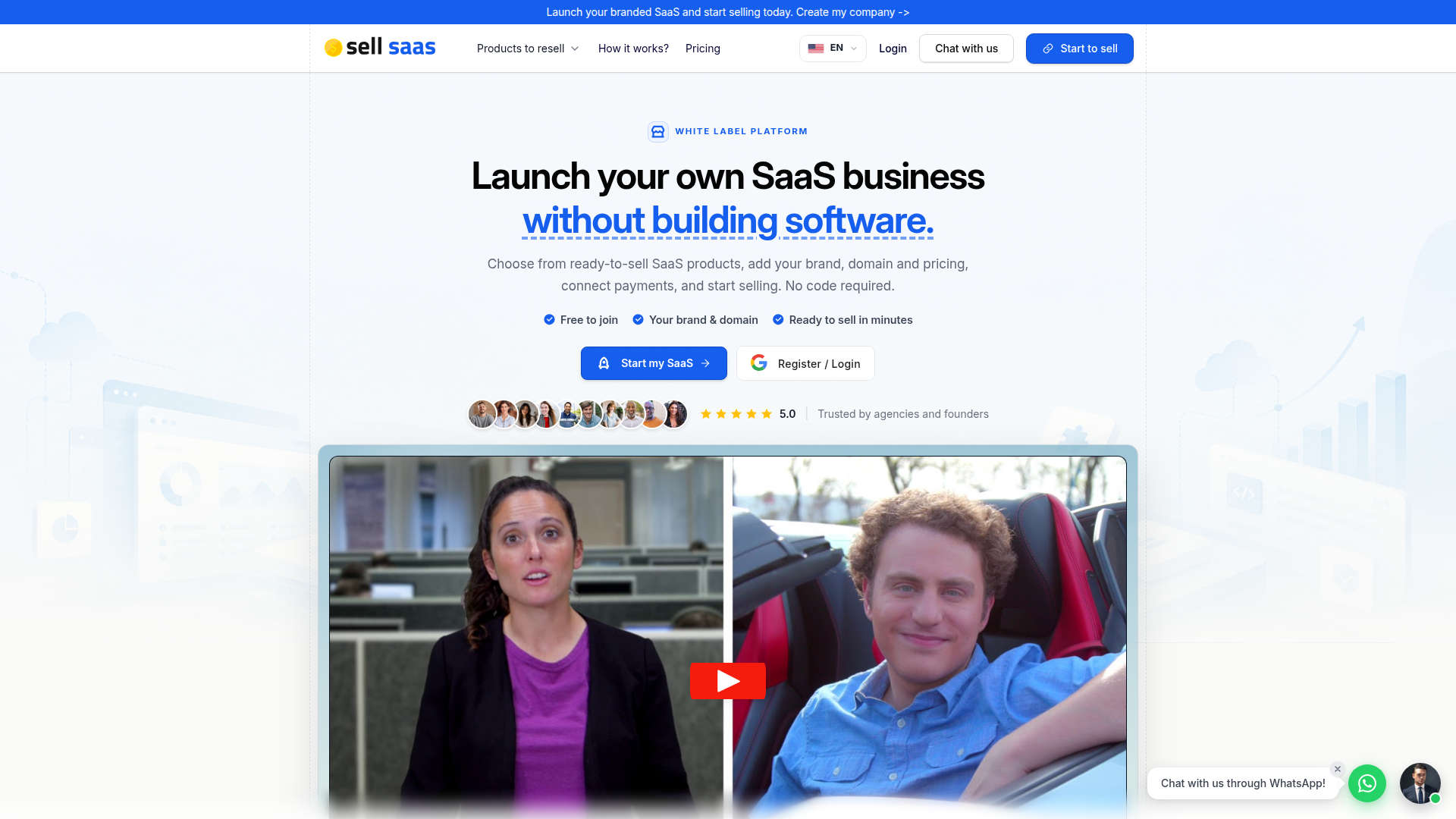
Sell SaaS revolutionizes the way entrepreneurs can launch their own Software as a Service business by providing a no-code platform with ready-to-sell products. This allows users to easily brand their offerings, set pricing, and integrate payment systems to start generating revenue without the typical customer support burden. With tools like automated sales agents and fraud protection, Sell SaaS empowers aspiring business owners to become successful CEOs in the tech industry with minimal investment and technical know-how. Discover more at Sell SaaS today!
FAQ
- What are the primary challenges of customer support in SaaS sales?
Customer support in SaaS sales often faces challenges like software complexity, requiring extensive knowledge for troubleshooting. Additionally, global usage demands support across multiple time zones, which can strain resources and lead to inefficiencies if not managed properly. - How can self-service sales models benefit SaaS companies?
Self-service sales models empower customers to explore and purchase software independently, reducing the need for direct sales interactions. This approach accelerates the sales cycle and allows support teams to focus on complex queries, enhancing operational efficiency and customer satisfaction. - What strategies can help reduce the customer support burden in SaaS?
Enhancing self-service capabilities with comprehensive onboarding materials and leveraging automation tools like chatbots can significantly reduce the need for extensive support. These strategies empower users to resolve issues independently and ensure immediate assistance for basic queries. - Why is reducing the support burden crucial for SaaS businesses?
Reducing the support burden is vital for improving operational efficiency and allowing resources to focus on product development and innovation. It also enables proactive customer engagement, contributing to a sustainable growth model and higher customer satisfaction rates. - How does automation improve customer interactions in SaaS?
Automation tools like chatbots and AI-driven platforms provide instant responses to customer queries, reducing the need for human intervention. This leads to faster response times, minimizes human error, and allows support teams to concentrate on strategic tasks such as upselling. - What are the benefits of leveraging marketplaces for SaaS sales?
Leveraging marketplaces provides SaaS businesses with access to a large audience seeking technology solutions, reducing customer acquisition time and resources. Marketplaces often handle billing and distribution, streamlining the sales process and allowing companies to focus on product development. - How does understanding Customer Lifetime Value (CLTV) impact SaaS sales?
Understanding CLTV helps businesses gauge the total revenue expected from a customer over time, which is crucial for subscription-based models. This insight allows companies to focus on customer retention strategies and optimize sales processes to enhance long-term profitability. - What are the emerging trends in SaaS sales and support?
A significant trend is the increasing preference for self-service sales models, driven by the need for efficiency and global reach. This approach allows customers to explore and purchase products with minimal sales interaction, catering to the demand for digital autonomy. - How can SaaS companies implement practical SMB setups effectively?
SaaS companies can adopt strategies like horizontal scaling to maximize resources and expand reach across multiple markets without altering core offerings. This approach increases revenue potential and helps distribute the customer support burden, enhancing overall operational efficiency. - Why is the SaaS sales cycle typically longer than other sales cycles?
The SaaS sales cycle is often longer due to the complexity and cost of the products involved, requiring adept sales teams to pitch and demonstrate technical solutions. This extended cycle necessitates a focus on customer retention and upselling to ensure sustained revenue streams.