


- 20th Nov '26
- Sell SaaS
- 24 minutes read
Top 7 SaaS Solutions for Marketing Teams Compared (2026)
In the rapidly evolving landscape of digital marketing, selecting the right Software as a Service (SaaS) solution can significantly impact a team's efficiency and success. This article provides a comprehensive comparison of the top seven SaaS tools tailored for marketing teams in 2026, including industry leaders like HubSpot, Marketo, and Mailchimp, as well as niche players such as Sell SaaS. Each section delves into the unique strengths of these platforms, from HubSpot's prowess in inbound marketing to Marketo's enterprise-level automation capabilities. Readers will gain insights into pricing models, integration options, and the specific use cases each tool excels in, helping them make informed decisions tailored to their marketing needs. Whether you're a small business looking for user-friendly solutions or a large enterprise seeking robust automation, this guide will equip you with the knowledge to choose the best fit for your team.
1. HubSpot
Best for Inbound Marketing
HubSpot is highly regarded as a top choice for inbound marketing teams. Its comprehensive suite of tools is designed to attract, engage, and delight customers. The platform excels in providing solutions for businesses aiming to build strong relationships with their audience through content-driven strategies. With its robust CRM capabilities, HubSpot allows marketing teams to manage customer interactions effectively and streamline their campaigns.
For teams focused on nurturing leads and converting them into loyal customers, HubSpot offers an integrated approach that combines email marketing, social media management, and analytics. This makes it an ideal choice for organizations looking to implement a cohesive inbound marketing strategy.
Starting Price and Main Features
HubSpot's pricing starts at $45 per month, making it accessible for many marketing teams. This entry-level plan includes essential features like email marketing, CRM, and analytics tools. These features are crucial for tracking campaign performance and understanding customer behavior.
The platform's high CRM and automation fit ensures that marketing teams can automate repetitive tasks, allowing them to focus on more strategic initiatives. HubSpot's user-friendly interface and extensive library of resources also provide valuable support for teams new to marketing automation.
| Feature | Details |
|---|---|
| Email Marketing | Automated campaigns and personalized content |
| CRM | Comprehensive customer relationship management |
| Analytics | In-depth insights into marketing performance |
Limitations and Who Should Skip It
Despite its strengths, HubSpot can become expensive for advanced features, which might not be suitable for all teams. As marketing needs grow, the costs associated with additional functionalities can increase significantly. Therefore, small teams with a limited budget may find HubSpot's pricing challenging to justify.
For those with minimal marketing needs or smaller budgets, exploring other SaaS solutions for marketing teams compared might be beneficial. Alternatives that offer more budget-friendly options without compromising on essential features could be a better fit for such teams.
- Best for inbound marketing
- Starting price: $45/month
- Main features: Email marketing, CRM, analytics
2. Marketo
Best Fit for Enterprise Marketing Automation
Marketo is a leading choice for enterprise marketing automation, offering robust tools that cater to large organizations with complex marketing needs. Its suite of features is designed to manage extensive marketing campaigns, making it ideal for companies that require comprehensive solutions. The platform excels in areas such as lead management, email campaigns, and advanced analytics, providing the depth and breadth necessary for sophisticated marketing strategies.
Marketo's high CRM and automation fit makes it a strong contender for businesses looking to integrate marketing efforts with sales processes. This integration capability ensures that marketing teams can efficiently track and manage customer interactions across various channels, enhancing overall productivity and customer engagement.
Starting Price and Main Features
When it comes to pricing, Marketo's cost structure is unclear, and potential users may need to contact the vendor for specific details tailored to their business needs. Despite the lack of transparent pricing, the platform's main features are well-documented and include advanced lead management, comprehensive email campaign tools, and in-depth analytics capabilities. These features allow marketing teams to execute and analyze complex campaigns effectively.
Marketo's lead management system is particularly noteworthy, offering tools for scoring, nurturing, and tracking leads throughout the sales funnel. This capability is complemented by its email marketing features, which support personalized and automated email campaigns, ensuring targeted communication with potential customers.
Limitations and Who Should Skip It
While Marketo is a powerful tool, it does come with certain limitations that potential users should consider. The platform is known for its complex setup process, which can be challenging for teams without dedicated IT support. Additionally, the high cost associated with Marketo may not be justifiable for smaller businesses or startups with limited budgets.
For small businesses, the complexity and expense of Marketo might outweigh its benefits. These companies might find it more practical to explore other marketing automation tools that offer simpler setups and more affordable pricing. In summary, while Marketo is a strong choice for large enterprises, smaller organizations should carefully weigh its features against their specific needs and resources.
| Feature | Details |
|---|---|
| Best for | Enterprise marketing automation |
| Starting Price | Pricing unclear |
| Main Features | Lead management, email campaigns, analytics |
| CRM/Automation Fit | High |
| Limitations | Complex setup, high cost |
| Who Should Skip It | Small businesses |
- Ideal for large enterprises with complex marketing needs
- Strong integration with CRM systems
- Comprehensive analytics for data-driven strategies
- Challenging setup process for smaller teams
- High costs may deter small businesses
3. Mailchimp
Best for Email Marketing
Mailchimp is widely recognized as a leading tool in the realm of email marketing. Its robust platform is designed to help marketing teams create, send, and analyze email campaigns with ease. The tool is particularly beneficial for businesses aiming to build and maintain strong relationships with their audience through targeted email communication.
With features like audience segmentation and detailed analytics, Mailchimp allows marketers to tailor their messages and measure the effectiveness of their campaigns. This makes it an ideal choice for teams focused on maximizing their email marketing efforts.
Starting Price and Main Features
Mailchimp offers a starting price of $11 per month, making it a cost-effective option for small to medium-sized businesses. This entry-level pricing provides access to essential features such as email campaigns, audience management, and basic analytics. These tools are sufficient for teams looking to manage their email lists and track engagement metrics.
In addition to these core features, Mailchimp offers a medium level of CRM and automation integration. While it provides some automation capabilities, these are more limited in the lower-tier plans, which could be a consideration for teams needing advanced automation solutions.
Limitations and Who Should Skip It
Despite its strengths, Mailchimp does have some limitations. The automation features are relatively basic in the lower pricing tiers, which might not meet the needs of teams requiring comprehensive CRM functionalities. For businesses that demand advanced automation and CRM integration, other tools might be more suitable.
Teams that heavily rely on sophisticated customer relationship management features should consider alternatives to Mailchimp. Its limited capabilities in this area mean that those needing a more robust CRM solution may find it lacking.
| Feature | Availability |
|---|---|
| Email Campaigns | Available |
| Audience Management | Available |
| Analytics | Available |
| Advanced CRM Features | Limited |
- Best for email marketing
- Starting price: $11/month
- Medium CRM and automation fit
- Limited automation in lower tiers

4. Pardot
Best for B2B Marketing Automation
Pardot is an ideal choice for B2B marketing automation, offering robust tools to streamline and enhance marketing efforts. It excels in lead scoring, email marketing, and CRM integration, making it a powerful ally for businesses looking to optimize their marketing strategies. The platform is particularly beneficial for companies already using Salesforce, as it integrates seamlessly with Salesforce's CRM, providing a cohesive experience for managing customer relationships and marketing campaigns.
For organizations focused on generating and nurturing leads, Pardot's capabilities in automating repetitive tasks and personalizing communication can significantly improve efficiency and effectiveness. These features position Pardot as a top contender for businesses aiming to scale their marketing operations while maintaining high personalization levels.
Starting Price and Main Features
Pardot's pricing begins at $1,250 per month, reflecting its premium positioning in the market. This cost includes access to its main features such as lead scoring, which helps prioritize leads based on their likelihood to convert, and advanced email marketing tools that allow for highly targeted campaigns. Additionally, Pardot's CRM integration is a standout feature, providing a high degree of automation fit that enhances the overall marketing workflow.
The platform's comprehensive suite of tools is designed to support complex marketing strategies, making it suitable for medium to large enterprises that require advanced functionalities and are willing to invest in a high-end solution.
Limitations and Who Should Skip It
Despite its strengths, Pardot comes with certain limitations that potential users should consider. The most notable drawback is its high price point, which may be prohibitive for smaller businesses or startups with limited budgets. Additionally, Pardot is largely limited to Salesforce users, which means companies not using Salesforce may find integration challenging or impossible.
Therefore, businesses that do not utilize Salesforce or those looking for a more cost-effective solution might want to explore other options. Alternatives such as HubSpot or ActiveCampaign might offer more flexibility in terms of pricing and integration with different CRM systems.
| Feature | Details |
|---|---|
| Best for | B2B marketing automation |
| Starting Price | $1,250/month |
| Main Features | Lead scoring, email marketing, CRM integration |
| CRM/Automation Fit | High |
| Limitations | High price point, limited to Salesforce users |
| Who Should Skip | Non-Salesforce users |
- Ideal for medium to large enterprises.
- Best suited for businesses already using Salesforce.
- Not recommended for small businesses or non-Salesforce users.
5. ActiveCampaign
Best for Email Marketing and Automation
ActiveCampaign is highly regarded for its robust email marketing and automation capabilities. It excels in creating personalized email campaigns and automating complex customer journeys, making it an ideal choice for marketing teams focused on enhancing customer engagement through tailored communication strategies. The platform's ability to segment audiences and trigger automated workflows based on user behavior is particularly beneficial for businesses looking to streamline their marketing efforts.
While ActiveCampaign's automation features are a standout, its CRM capabilities are also noteworthy, albeit with a medium fit for teams needing comprehensive CRM solutions. This makes it suitable for marketing teams that prioritize email marketing but still require basic CRM functionalities to manage customer interactions effectively.
Starting Price and Main Features
ActiveCampaign offers a competitive starting price of $9 per month, making it accessible for small to medium-sized businesses. This entry-level pricing provides access to essential features such as email automation, CRM, and audience segmentation, allowing teams to implement sophisticated marketing strategies without a hefty investment.
Key features of ActiveCampaign include its intuitive email builder, advanced segmentation tools, and a variety of automation templates that simplify the creation of complex workflows. These features are designed to enhance the efficiency of marketing operations, allowing teams to focus on strategy rather than the technicalities of execution.
Limitations and Who Should Skip It
Despite its strengths, ActiveCampaign does present some limitations. New users may encounter a steep learning curve due to the platform's extensive feature set. This complexity can be a barrier for teams lacking technical expertise or those seeking a straightforward, user-friendly tool.
As a result, teams that require simple, easy-to-use marketing solutions might find ActiveCampaign to be more than they need. These teams might benefit from exploring alternatives that offer a more streamlined interface and fewer features, which can be easier to navigate and implement.
| Feature | Description |
|---|---|
| Email Automation | Create personalized campaigns with automated workflows. |
| CRM | Basic CRM capabilities for managing customer interactions. |
| Segmentation | Advanced tools for audience segmentation. |
- Best suited for teams focused on email marketing and automation.
- Starting price: $9/month.
- Medium fit for CRM needs.
- Learning curve may be challenging for new users.
- Not ideal for teams needing simple, intuitive tools.
6. Zoho MarketingHub
Best for Integrated Marketing Solutions
Zoho MarketingHub is particularly well-suited for businesses seeking integrated marketing solutions. Its comprehensive suite of tools covers everything from email marketing to social media management and analytics. This makes it an ideal choice for teams looking to streamline their marketing efforts under one platform. The platform's high compatibility with CRM systems enhances its appeal, allowing seamless automation and data integration.
Compared to other tools like HubSpot, which also offers a broad range of marketing functionalities, Zoho MarketingHub stands out for its affordability and comprehensive feature set. While HubSpot is known for its robust CRM capabilities, Zoho MarketingHub offers a more cost-effective solution for smaller teams or startups.
Starting Price and Main Features
Zoho MarketingHub starts at a competitive price of $10 per month, making it accessible for businesses of all sizes. This pricing structure is particularly attractive for small to medium-sized enterprises that need powerful marketing tools without a hefty investment.
The platform's main features include email marketing, social media management, and detailed analytics. These tools are designed to enhance marketing strategies by providing insights and automating repetitive tasks. The high level of CRM and automation fit ensures that marketing efforts are not only efficient but also highly targeted.
Limitations and Who Should Skip It
Despite its many strengths, Zoho MarketingHub is not without its limitations. The user interface can be overwhelming for those who prefer more straightforward, minimalistic tools. This complexity might deter users who are not tech-savvy or who require a more intuitive interface.
Users who prioritize simplicity and ease of use might find alternatives like Mailchimp or Constant Contact more suitable. These platforms offer more streamlined interfaces, albeit with fewer features compared to Zoho MarketingHub. Therefore, businesses that do not require extensive features or those that prefer a minimalistic approach might want to consider other options.
| Feature | Zoho MarketingHub | HubSpot |
|---|---|---|
| Starting Price | $10/month | Pricing unclear |
| Email Marketing | Included | Included |
| Social Media Management | Included | Included |
| CRM Integration | High | High |
- Best for integrated marketing solutions
- Starting price at $10/month
- Comprehensive feature set
- High CRM and automation compatibility
- Overwhelming user interface for some users
7. Sell SaaS
Best Fit for Sell SaaS
Sell SaaS is particularly well-suited for teams focused on SaaS product marketing. Its core features are tailored to support lead generation, customer engagement, and analytics, which are essential for marketing SaaS products effectively. The platform offers a medium fit for CRM and automation, making it a viable option for teams that require moderate integration capabilities without the need for complex automation workflows.
For marketing teams whose primary focus is on promoting and selling SaaS products, Sell SaaS provides tools that align well with these goals. The platform's features are designed to enhance customer interaction and provide insightful analytics, which are critical for refining marketing strategies and improving customer acquisition.
Starting Price and Main Features
One of the challenges with evaluating Sell SaaS is the unclear pricing. Without specific pricing details, it can be difficult for teams to budget effectively. However, the platform's main features include robust lead generation capabilities, tools for enhancing customer engagement, and comprehensive analytics. These features can significantly benefit teams looking to optimize their marketing strategies and increase their reach.
The platform's ability to generate leads and engage customers is complemented by its analytics tools, which provide valuable insights into marketing performance. This combination makes Sell SaaS a strong contender for teams that prioritize data-driven marketing approaches.
Limitations and Who Should Skip It
Despite its strengths, Sell SaaS has some limitations. Its niche focus on SaaS product marketing may not suit teams with broader marketing needs. If a team is not primarily focused on SaaS products, they might find the platform's offerings too narrow for their requirements.
Teams that require extensive CRM integration or advanced automation capabilities might also find Sell SaaS lacking. While it offers a medium fit for these needs, those seeking more comprehensive solutions might need to consider other platforms. Ultimately, Sell SaaS is best avoided by teams whose marketing strategies extend beyond the SaaS realm or require more complex automation and CRM functionalities.
| Feature | Details |
|---|---|
| Best For | SaaS Product Marketing |
| Starting Price | Pricing Unclear |
| Main Features | Lead Generation, Customer Engagement, Analytics |
| CRM/Automation Fit | Medium |
| Limitations | Niche Focus |
| Who Should Skip | Teams Not Focused on SaaS Products |
- Best for SaaS product marketing teams
- Main features include lead generation and analytics
- Medium fit for CRM and automation needs
- Pricing details are unclear
- Not ideal for teams with broader marketing needs

Side by Side Saas Solutions For Marketing Teams Compared Comparison
Key Considerations Before Choosing a SaaS Solution
When comparing SaaS solutions for marketing teams, it's crucial to understand your team's specific needs and objectives. Consider factors such as the size of your team, the complexity of your marketing campaigns, and the integrations required with existing tools. For instance, a small team might prioritize ease of use and affordability, while a larger team may need advanced analytics and robust automation features.
Another critical consideration is the level of support and training provided by the SaaS provider. Solutions like HubSpot offer extensive onboarding and customer support, which can be invaluable for teams new to marketing automation. On the other hand, more experienced teams might prefer tools like Marketo, which offer advanced customization but with a steeper learning curve.
Common Mistakes and How to Avoid Them
One common mistake marketing teams make is choosing a SaaS solution based solely on price. While cost is an important factor, it's essential to balance it with the features and support offered. Opting for the cheapest option can lead to inadequate functionality that hampers campaign effectiveness. For example, while Mailchimp is known for its affordability, it may not provide the advanced segmentation and personalization features that larger enterprises require.
Another pitfall is failing to test the solution thoroughly before committing. Most SaaS providers offer free trials or demos, and it's wise to take advantage of these to ensure the tool meets your needs. Engaging in a trial period with platforms like Salesforce Marketing Cloud can help identify any potential issues with integration or user interface before making a long-term commitment.
| Tool | Best for | Starting price | Main feature | Limitation |
|---|---|---|---|---|
| HubSpot | Inbound marketing | $45/month | Email marketing, CRM, analytics | Can be expensive for advanced features |
| Marketo | Enterprise marketing automation | pricing unclear | Lead management, email campaigns, analytics | Complex setup and high cost |
| Mailchimp | Email marketing | $11/month | Email campaigns, audience management, analytics | Limited automation features in lower tiers |
| Pardot | B2B marketing automation | $1,250/month | Lead scoring, email marketing, CRM integration | High price point, limited to Salesforce users |
| ActiveCampaign | Email marketing and automation | $9/month | Email automation, CRM, segmentation | Learning curve for new users |
| Zoho MarketingHub | Integrated marketing solutions | $10/month | Email marketing, social media, analytics | User interface can be overwhelming |
| Sell SaaS | SaaS product marketing | pricing unclear | Lead generation, customer engagement, analytics | Niche focus may limit broader use |
- Assess team size and campaign complexity.
- Evaluate integration needs with existing tools.
- Consider the level of support and training provided.
By considering these factors and avoiding common pitfalls, marketing teams can make well-informed decisions when choosing from the available SaaS solutions for marketing teams compared. This ensures that the selected tool not only fits the current needs but also scales with future growth and technological advancements.
As we transition from comparing the features of various SaaS solutions for marketing teams, it's important to consider the pricing structures of these tools to understand their overall value.
Pricing for Saas Solutions For Marketing Teams Compared Tools
Understanding Pricing Models and Decision Criteria
Before diving into specific pricing details, it's essential to understand the different pricing models that SaaS solutions for marketing teams typically offer. Most tools use a subscription-based model, often tiered to cater to various business sizes and needs. These tiers can range from basic plans with limited features to premium plans offering comprehensive capabilities.
When evaluating which plan to choose, consider factors such as the size of your team, the volume of campaigns you manage, and the specific features you require. For instance, a small startup might find a basic plan from HubSpot sufficient, while a larger enterprise might need the advanced features of Salesforce Marketing Cloud. By aligning your needs with the right pricing tier, you can optimize both your budget and tool effectiveness.
Tool-Specific Pricing Examples
Let's look at some specific tools to illustrate the pricing landscape. HubSpot offers a Marketing Hub starting at $50 per month for its basic plan, which includes essential marketing tools. In contrast, Salesforce Marketing Cloud is known for its robust features and typically starts at a higher price point, with pricing unclear for specific tiers without a direct quote.
Another example is Mailchimp, which provides a free tier for small-scale operations, but its premium plans can reach up to $299 per month, offering advanced analytics and automation features. This makes Mailchimp a versatile choice for businesses that anticipate scaling their operations.
Understanding these pricing structures and aligning them with your organization's needs will help ensure you select the most cost-effective and functional tool for your marketing team.
- Identify Your Needs: Determine the size of your team and the specific features required for your marketing efforts.
- Research Pricing Tiers: Compare different pricing plans and features offered by each tool to find the best fit.
- Evaluate Cost-Effectiveness: Align your budget with the tool's capabilities to ensure maximum efficiency and value.
| Tool | Starting price | Best for |
|---|---|---|
| HubSpot | $45/month | Inbound marketing |
| Marketo | pricing unclear | Enterprise marketing automation |
| Mailchimp | $11/month | Email marketing |
| Pardot | $1,250/month | B2B marketing automation |
| ActiveCampaign | $9/month | Email marketing and automation |
| Zoho MarketingHub | $10/month | Integrated marketing solutions |
| Sell SaaS | pricing unclear | SaaS product marketing |
Integrations and How to Choose
Understanding Integration Needs
Before selecting a SaaS solution for your marketing team, it's crucial to understand your integration needs. Different tools offer varying levels of integration capabilities, which can significantly impact your workflow. For instance, HubSpot offers seamless integration with CRM systems, making it ideal for teams that rely heavily on customer relationship management. In contrast, Mailchimp focuses on email marketing integrations, which might be more suitable for teams prioritizing email campaigns.
Consider the existing tools in your tech stack and how well the new SaaS solution will integrate with them. This ensures that data flows smoothly between platforms, reducing manual data entry and potential errors. Additionally, evaluate whether the SaaS provider offers open APIs, which can facilitate custom integrations tailored to your specific needs.
Avoiding Common Mistakes
One common mistake marketing teams make is choosing a SaaS solution based solely on its popularity or brand reputation without considering their unique requirements. While Salesforce is a powerful tool, it might be overkill for smaller teams that don't need extensive CRM functionalities. Instead, a more lightweight option like Pipedrive could be more cost-effective and easier to implement.
Another pitfall is neglecting to assess the scalability of the integration options. As your business grows, your integration needs may evolve. Ensure the SaaS solution can scale with your business, offering additional integrations or more robust capabilities as needed. This foresight can save time and resources in the long run.
Steps to Evaluate Integration Effectiveness
To evaluate whether your chosen SaaS solution's integrations are effective, follow these steps:
- Identify key performance indicators (KPIs) that the integration should improve, such as data accuracy or time saved on manual tasks.
- Monitor these KPIs over a set period to assess improvements.
- Gather feedback from team members using the integrated systems to identify any issues or areas for improvement.
- Regularly review the integration's performance and make adjustments as necessary to ensure it continues to meet your team's needs.
By systematically evaluating integration effectiveness, you can ensure that your SaaS solution continues to support your marketing team's objectives efficiently.
Which Saas Solutions For Marketing Teams Compared Option Fits Best?
What readers need to understand before taking action
Readers deciding on Which Saas Solutions For Marketing Teams Compared Option Fits Best? need clear criteria before acting. The practical signals around Which Saas Solutions For Marketing Teams Compared Option Fits Best? are what change the decision.
Common mistakes and how to avoid them
A concrete example or scenario for Which Saas Solutions For Marketing Teams Compared Option Fits Best? helps compare real options.
Practical steps or decision criteria
Tradeoffs and constraints change which recommendation fits Which Saas Solutions For Marketing Teams Compared Option Fits Best?.
| Point | What to check |
|---|---|
| Which Saas Solutions For Marketing Teams Compare | Confirm the practical details that affect the decision. |
| Constraints | Note limits, costs, timing, or fit that change the recommendation. |
- Which Saas Solutions For Marketing Teams Compared Option Fits Best? depends on cost, fit, and operational effort.
- Compare options against the constraints you already know.
- Pick the next step that matches those constraints.
Conclusion
In conclusion, selecting the right SaaS solution for your marketing team in 2026 involves a careful evaluation of each platform's unique strengths and how they align with your specific needs. HubSpot remains a leader for inbound marketing with its comprehensive CRM and content-driven strategies. Marketo stands out for enterprise-level automation with its robust lead management and analytics capabilities. Mailchimp offers a cost-effective solution for email marketing, ideal for small to medium-sized businesses. Pardot excels in B2B marketing automation, especially for Salesforce users, while ActiveCampaign provides powerful email marketing and automation tools. Zoho MarketingHub is perfect for those seeking integrated marketing solutions, and Sell SaaS caters to teams focused on SaaS product marketing. Each tool offers distinct pricing models and integration capabilities, crucial factors to consider based on your team's size and technological ecosystem. To make the best choice, assess your marketing objectives, budget constraints, and integration needs, ensuring the selected SaaS solution enhances your team's efficiency and success.
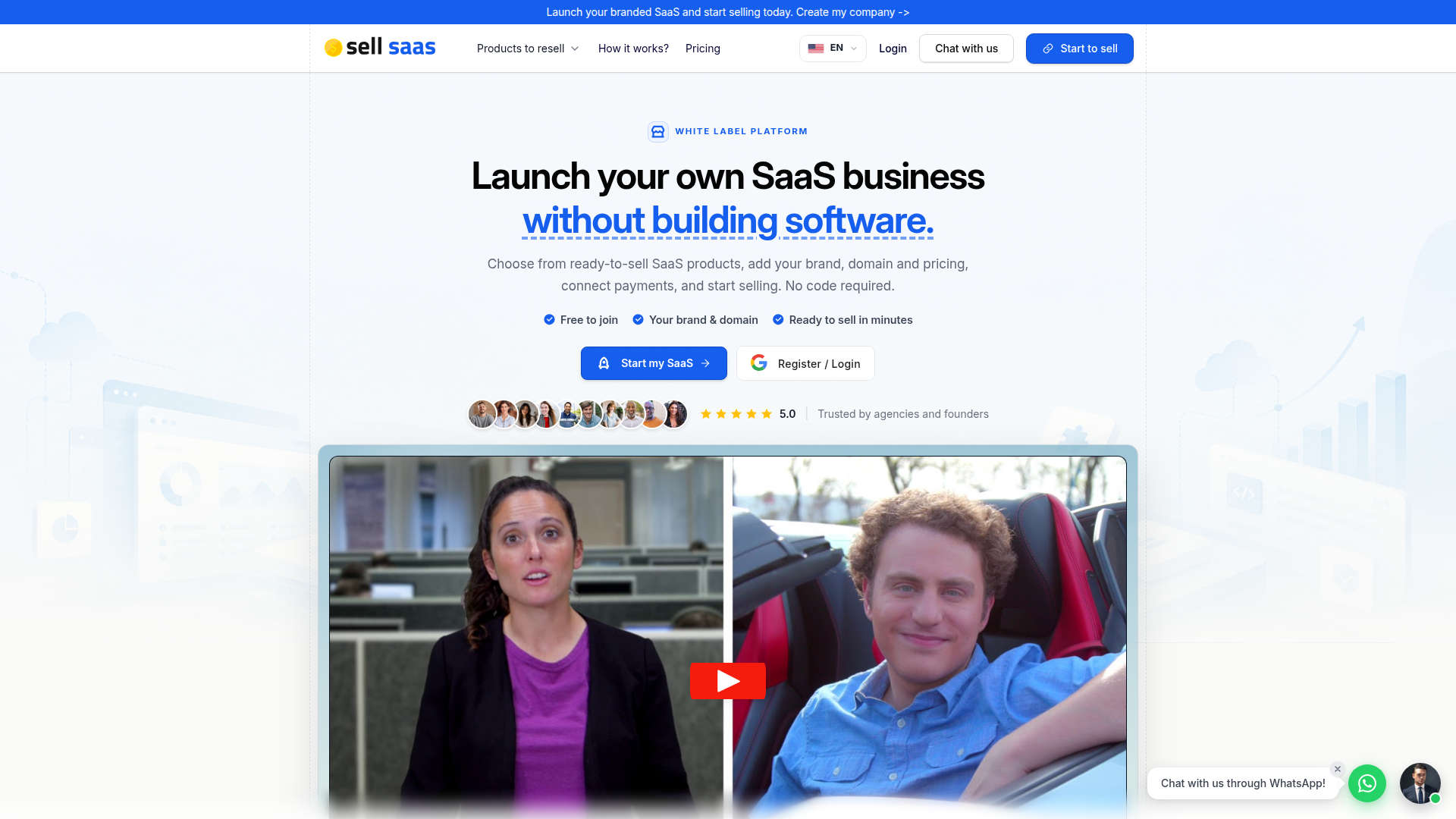
For entrepreneurs eager to dive into the SaaS industry without extensive technical know-how, Sell SaaS offers an ideal solution. This platform provides a variety of ready-to-sell SaaS products that can be customized and launched with ease, making it perfect for aspiring business owners. With features like SEO content generation and automated sales agents, Sell SaaS simplifies the process of starting a software business, empowering individuals to become successful tech entrepreneurs. Discover more at Sell SaaS today!
FAQ
- What makes HubSpot a top choice for inbound marketing?
HubSpot is highly regarded for its comprehensive suite of tools designed to attract, engage, and delight customers through content-driven strategies. Its robust CRM capabilities allow marketing teams to manage customer interactions effectively and streamline campaigns, making it ideal for inbound marketing efforts. - Why is Marketo considered suitable for enterprise marketing automation?
Marketo offers robust tools that cater to large organizations with complex marketing needs, excelling in lead management, email campaigns, and advanced analytics. Its high CRM and automation fit makes it a strong contender for businesses integrating marketing with sales processes. - How does Mailchimp support email marketing efforts?
Mailchimp is recognized for its ease in creating, sending, and analyzing email campaigns. It offers features like audience segmentation and detailed analytics, allowing marketers to tailor messages and measure campaign effectiveness, making it ideal for maximizing email marketing efforts. - What are the key features of Pardot for B2B marketing automation?
Pardot excels in lead scoring, email marketing, and CRM integration, providing a cohesive experience for managing customer relationships. Its seamless integration with Salesforce and automation capabilities make it a powerful tool for optimizing B2B marketing strategies. - Why is ActiveCampaign favored for email marketing and automation?
ActiveCampaign is known for its robust email marketing and automation capabilities, excelling in creating personalized campaigns and automating customer journeys. Its ability to segment audiences and trigger automated workflows based on user behavior enhances customer engagement. - What makes Zoho MarketingHub suitable for integrated marketing solutions?
Zoho MarketingHub offers a comprehensive suite of tools covering email marketing, social media management, and analytics. Its high compatibility with CRM systems allows seamless automation and data integration, making it ideal for teams seeking streamlined marketing efforts. - How does Sell SaaS cater to SaaS product marketing?
Sell SaaS is tailored for teams focused on SaaS product marketing, supporting lead generation, customer engagement, and analytics. It offers a medium fit for CRM and automation, suitable for teams needing moderate integration capabilities without complex workflows. - What should be considered when comparing SaaS solutions for marketing teams?
When comparing SaaS solutions, consider your team's size, campaign complexity, and integration needs. Small teams may prioritize ease of use and affordability, while larger teams might require advanced analytics and robust automation features. - How do pricing models vary among SaaS solutions for marketing teams?
SaaS solutions typically offer subscription-based models, often tiered to cater to different business sizes and needs. These tiers range from basic plans with limited features to premium plans offering comprehensive capabilities, requiring evaluation based on team size and budget. - What factors should guide the choice of a SaaS solution for a marketing team?
Understanding integration needs is crucial before selecting a SaaS solution. Consider how well the tool integrates with existing systems, such as CRM, and whether it supports the specific marketing strategies your team employs, ensuring it aligns with your workflow requirements.