


- Sell SaaS
- /
- Blog
- /
- How Can SaaS Companies Streamline Hardware Supply Chain Management Without Increasing Costs?
- 03rd Jun '26
- Sell SaaS
- 6 minutes read
How Can SaaS Companies Streamline Hardware Supply Chain Management Without Increasing Costs?
Most Saas companies never chose to venture into hardware. Typically it does not make itself noticeable to them. Perhaps your platform depends on a physical device, be it a gateway, sensor or reader and all of a sudden you're looking into sourcing components, coordinating manufacturers, and managing inventory. None of this is what you bargained for and here's you trying to maintain your supply chain without a huge budget increase.
The good news? Reducing the hardware supply chain is very achievable even in leaner teams. It only takes a different way to look at where your complexity actually resides, and where you can easily mow it down without being heard.
Why Hardware Supply Chains Are Surprisingly Painful for SaaS Teams
Our research indicates that hardware supply chains are actually a surprisingly painful experience for SaaS teams. Software teams are designed to be fast and iterative. There are years-long lead times, minimum order quantities, and relationships that constitute hardware supply chains. Friction in those two worlds is very real when they collide.
The real issue is typically "sight". A SaaS organization could be 3-4 steps away from the actual location where its components are made. Orders get sent out via distributors, contract manufacturing and fulfillment partners until someone in-house realizes that there is a problem. When shortage appears on your radar, it is already impacting customers.
Add cost pressure on top of that. The margins on hardware are narrow, and for SaaS companies, hardware has more often than not become an auxiliary business line and a vehicle to drive the other business. Each dollar of inefficiency in the supply chain costs more than it would in a traditional inflexible pricing hardware business.
Start With Supplier Consolidation (But Be Strategic About It)
The quickest way to lessen complexity without compromising quality is to consolidate suppliers. There are fewer vendors, fewer relationships to maintain and more leverage in negotiating terms.
However, consolidation should be planned wisely, meaning that one shouldn't have a single point of failure. This is best achieved by:
-
Having one primary supplier for each component category.
-
Keeping a qualified second option to be called upon.
This provides efficiency but not fragile performance. Don't only consider the supplier's price per unit. Take into account:
-
Lead times.
-
Quality history.
-
Scalability.
If the supplier is cheaper but is never able to ship on time or has a high percentage of defective products, the savings are definitely not worth the expense.
The Cable Assembly Problem Nobody Talks About
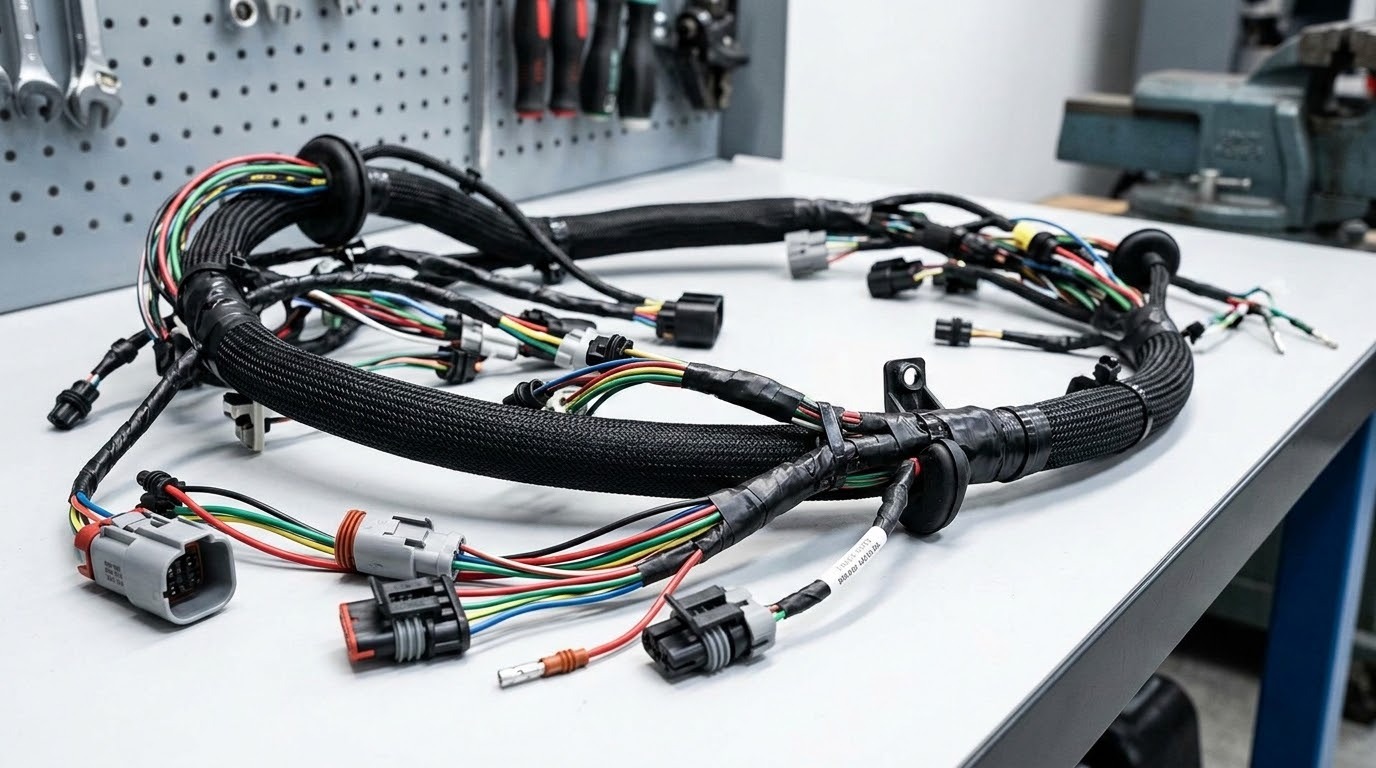
The Cable Assembly Problem Nobody Talks About is a problem that is challenging to solve. One of those product categories that SaaS companies often overlook until it's too late: Wiring harnesses and cable assemblies. Easy to treat like any commodity until you have a quality problem or lead time that has tripled because your supplier got sold over the weekend.
Many procurement teams are unaware of the importance of selecting the right wire harness manufacturer. A good partner will:
-
Create something to spec.
-
Assist you to make that spec even better.
-
Identify problems in a timely fashion.
-
Be flexible with capacity to change when demand suddenly changes.
There is a difference between reactive suppliers and proactive suppliers which can cause weeks of schedule variance. Downstream cost considerations also play into cable design. All of these parameters have an impact on the field reliability and assembly complexity. One of those things that pays for itself many times over is getting your manufacturer in on the design process don't wait until after it's designed.
Inventory Strategy: Stop Holding More Than You Need To
One of the intangible expenses in a hardware supply chain is excess inventory. It ties up capital, adds storage space and introduces the danger of the components becoming obsolete before they are utilized. A SaaS company looking to improve software profits wouldn't want to have an old stack of hardware in their warehouse.
Strategies for Inventory Efficiency:
-
Improve Demand Forecasting: Even if it's an approximate from the sales pipeline and renewal rates, there's a truer sense of what you need and when. Even if you have to do it manually at first, it can make a difference if you are able to connect your CRM information to the procurement process.
-
Consignment Arrangements: Another little used option is the consignment arrangement that can be done with key suppliers. You buy the components but do not have to pay for them until they have been used. This is much more prevalent than SaaS procurement teams realize, particularly after having a proven history of working with a supplier.
Component Standardization Saves More Than You Think
Most of the time, the cost of component standardization is underestimated. Each different part you add to your bill of materials increases in complexity. Each of these is a small decision, which over time will add up to a heavy burden for your operations if you use a different connector type, a slightly different wire gauge, or a proprietary part that only one supplier carries.
One of the most impactful things a SaaS business can do is adopt a standard around some widely available parts. This is particularly for connectors and sub-assemblies. Benefits of using commonly used components, such as assemblies based on a Molex wire harness, include:
-
A wide range of suppliers.
-
Increased availability of components.
-
Lower overall costs.
Proprietary configurations can be enticing during product design, but are always associated with supply risk and are more expensive at scale.
Visibility Tools and Supplier Relationships
If you're keeping track of your hardware supply chain in a spreadsheet and by email, then you know the pain. The bright side of the story is that you don't have to change everything all at once. Begin at the top of the "noisy" part of the process which is typically supplier communication or inventory tracking and work down. The majority of the latest supply chain tools fit into systems that you're utilizing and do not need a 6 month rollout.
The end result is not to see things all the time, just enough to see it before it gets to be a crisis. Combined with real customer supplier relationships, you will see that your suppliers always take your business into account. These relationships involve:
-
Regular visits.
-
Providing demand forecasts in advance.
-
Providing customer feedback on quality.
-
Timely payment.
It's not some kind of soft benefit. It is actually an actual benefit in the operations.
The Bottom Line
Hardware supply chains do not need to hinder the growth of a Saas company. The journey has more to do with making strategic decisions around suppliers, component standardization, visibility, and cultivating true partnerships with those designing your hardware than it does with new technology. It doesn't always cost more to get this right, it just costs smarter. It's a distinction that's worth striving for, anyway.