


- Sell SaaS
- /
- Blog
- /
- How Can SaaS Platforms Help Streamline Electrical Design and Production Workflows?

- 03rd Jun '26
- Sell SaaS
- 6 minutes read
How Can SaaS Platforms Help Streamline Electrical Design and Production Workflows?
You can design a flawless schematic on your screen, but that does not mean anyone can actually build it. The gap between engineering intent and manufacturing reality is where most projects lose money. We still see major companies managing complex electrical designs with isolated desktop software and dozens of emailed spreadsheets. It works until production builds a unit using an outdated file. Then you eat the cost of scrapped parts, wasted labor, and lost time.
Software as a Service platforms are finally catching up to the specific needs of electrical engineering. They are replacing those disconnected local files with collaborative environments that actually reflect how hardware is built today.
The End of Isolated Engineering
Let's look at a standard legacy workflow. An engineer finishes a design on a local machine. They generate a Bill of Materials, export it as a spreadsheet, and send it to the purchasing department. Purchasing discovers that three specific connectors have a forty week lead time. They send an email back asking for alternatives. By the time the substitutions are approved and the design is updated, you have multiple versions of the same BOM sitting in different inboxes across the company.
Cloud based engineering platforms fix this by establishing a single source of truth. The data lives in one centralized place.
-
When an engineer swaps a terminal or changes a wire gauge in the browser, that changes updates across the entire project instantly.
-
Purchasing sees the updated requirements right away.
-
The manufacturing floor sees the new specifications.
There is no guesswork about which file is current because everyone is looking at the exact same live data. You stop managing files and start managing the actual design.
Bringing Order to Manufacturing Data
Designing the circuit is only the first step. You still have to give the shop floor clear, unambiguous instructions on how to put it together. When you are dealing with a complex wire harness and cable assembly, the documentation burden becomes massive very quickly. You have to specify cut lengths, strip lengths, heat shrink placement, tooling requirements, and test parameters for every single connection.
Older systems force you to generate these documents manually. Engineers end up spending hours copying data from a schematic into a word processor or a separate drafting tool just to create build instructions. If they miss a single update, the shop floor operator has to guess, and that is where quality control issues begin.
SaaS platforms built for electrical design automate the bulk of this manual work. They pull data directly from your schematic to generate precise wire lists, pinouts, and manufacturing drawings. Your team spends less time formatting documents and more time doing actual engineering work. It also completely removes the risk of someone mistyping a wire length during a manual data transfer.
Accelerating Initial Builds
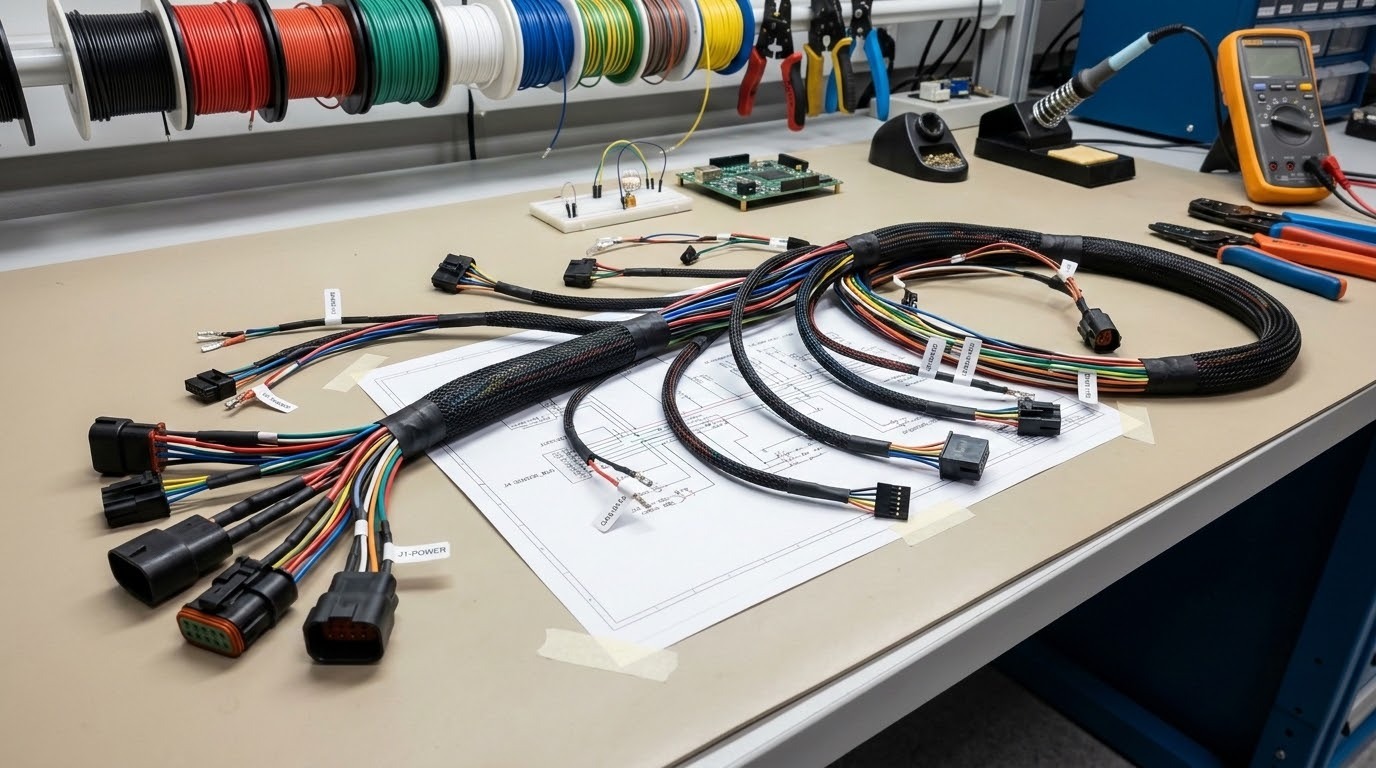
Getting the first physical unit built is always a major bottleneck. You have to test the design, validate the physical routing, and find out if the assembly can be manufactured reliably at volume. When you need a prototype wire harness on the test bench by the end of the week, speed is everything. Cloud tools let you collaborate with quick turn contract manufacturers much faster than legacy methods. Instead of bundling up proprietary CAD files and hoping your vendor has the right software version to open them, you just share a secure project link.
The manufacturer gets immediate access to the netlist and the live BOM. If they spot a manufacturability issue or realize a specific connector shell will not clear a housing, they can leave a comment directly on the design. This immediate feedback loop cuts days out of the typical review cycle. You avoid the traditional back and forth email chain and get your physical parts built faster.
Component Sourcing in Real Time
Supply chain unpredictability is just a normal part of doing business now. Designing an elegant system does you no good if you cannot physically acquire the components to build it. One of the biggest advantages of moving to a SaaS model is direct API integration with component distributors. As you are selecting a relay or a microcontroller for your schematic, the software can pull in real-time pricing and stock levels. You know immediately if a part is nearing obsolescence or if it is out of stock.
This keeps you from designing a product around a component that will stall your entire production run three months down the line. It forces engineers to make smart sourcing decisions during the design phase rather than leaving it as a problem for the procurement team to solve right before production starts.
Standardizing Your Component Libraries
Almost every engineering department has at least one person who keeps their own custom library of parts on a local hard drive. They build their own symbols and custom footprints. When that person goes on vacation, the rest of the team struggles to interpret their files or update their designs. It is a massive single point of failure.
A cloud platform forces the entire department to standardize. You build and maintain a single company wide component library. When a new part is vetted and approved, it gets added to the central database. Everyone has access to it immediately.
The schematic symbol, the physical footprint, and all the manufacturer metadata are locked in and verified. This dramatically reduces errors caused by inconsistent part data. It also makes onboarding new engineers significantly easier. They do not have to spend their first month figuring out where the legacy parts are hidden on a shared server.
The Practical Reality of Implementation
Switching your engineering tools is always an uncomfortable process. Your team will likely push back against learning a new interface. Someone has to manage the migration of all your legacy data into the new system. It requires an upfront investment of time that most busy departments do not feel they have.
The payoff becomes obvious during your first major revision right before a production deadline. In a disconnected system, a late stage change means a weekend of cross checking spreadsheets and hoping you caught every instance of a modified part number. If you miss one, the shop floor ends up crimping the wrong terminals and the whole batch has to be reworked.
With a centralized SaaS tool, the update is pushed once. The documentation updates automatically. The shop floor pulls the new instructions from a tablet and production keeps moving. The ultimate goal is simply getting a reliable product out the door faster and with fewer defects. Cloud platforms handle the heavy lifting of data management so your engineering team can focus entirely on getting the build right.