


- 03rd Jun '26
- Sell SaaS
- 6 minutes read
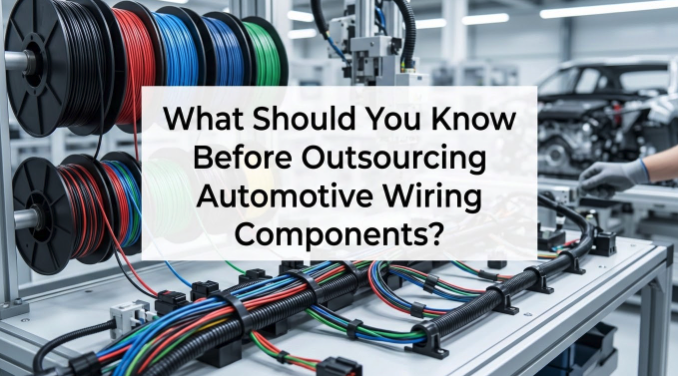
What Should You Know Before Outsourcing Automotive Wiring Components?
Outsourcing automotive wiring always looks like an easy win on paper. You cut labor costs, free up floor space, and theoretically get a plug and play product delivered to your loading dock. Then the first batch arrives. The wire lengths are off by half an inch, the crimps are inconsistent, and a batch of connectors won't seat properly.
Suddenly, the money you saved is gone, burned up in rework and delayed production. Wiring is the nervous system of any vehicle. When you hand that responsibility to an outside supplier, you need to know exactly what you're getting into before you sign a purchase order. It takes serious vetting to protect your product quality and keep your assembly line moving.
Look Hard at the Tooling
When you get a quote that seems too good to be true, the supplier is usually cutting corners on tooling. High quality applicator dies for automated crimping machines are expensive. If a vendor uses worn-out or generic dies to save money, you end up with bad crimps. A bad crimp means high resistance, heat buildup, and eventually a failure in the field.
You need to ask specific questions about their equipment:
-
Are they using the connector manufacturer's specified tooling, or are they making do with aftermarket alternatives?
-
Ask for crimp cross-section photos from their first article inspection.
If they hesitate or don't know what you're asking for, walk away. You can't compromise on the physical connection between the wire and the terminal.
Finding a Facility That Matches Your Volume
Not every supplier is a good fit for every project. If you bring a low volume run to a massive tier one wire harness factory, you're going to be their lowest priority. Your project will get pushed back every time a bigger client needs an emergency run. You will struggle to get their attention when issues pop up.
On the flip side, a small shop might not have the automated cutting, stripping, and crimping equipment needed to handle a rapid scale up in production. They might rely too heavily on manual labor, which introduces human error. You want a partner whose sweet spot aligns exactly with your annual volume and batch sizes. Ask them what their average run size is and what percentage of their capacity your project will consume.
Material Specifications and Substitutions
Suppliers often try to substitute materials to lower their costs. You specify TXL wire, and they run the job with primary wire that has a lower temperature rating. You ask for genuine Delphi or Deutsch connectors, and they use knockoffs that look identical but lack the same sealing integrity.
You have to lock down your bill of materials tightly:
-
Specify the exact wire gauge in AWG.
-
Define the specific insulation type.
-
List the manufacturer for every connector and terminal.
Make it clear that no substitutions are allowed without written engineering approval. The environment under a hood or inside a chassis is brutal; heat, vibration, and chemical exposure will destroy substandard materials in a matter of months.
Designing for Specific Environments
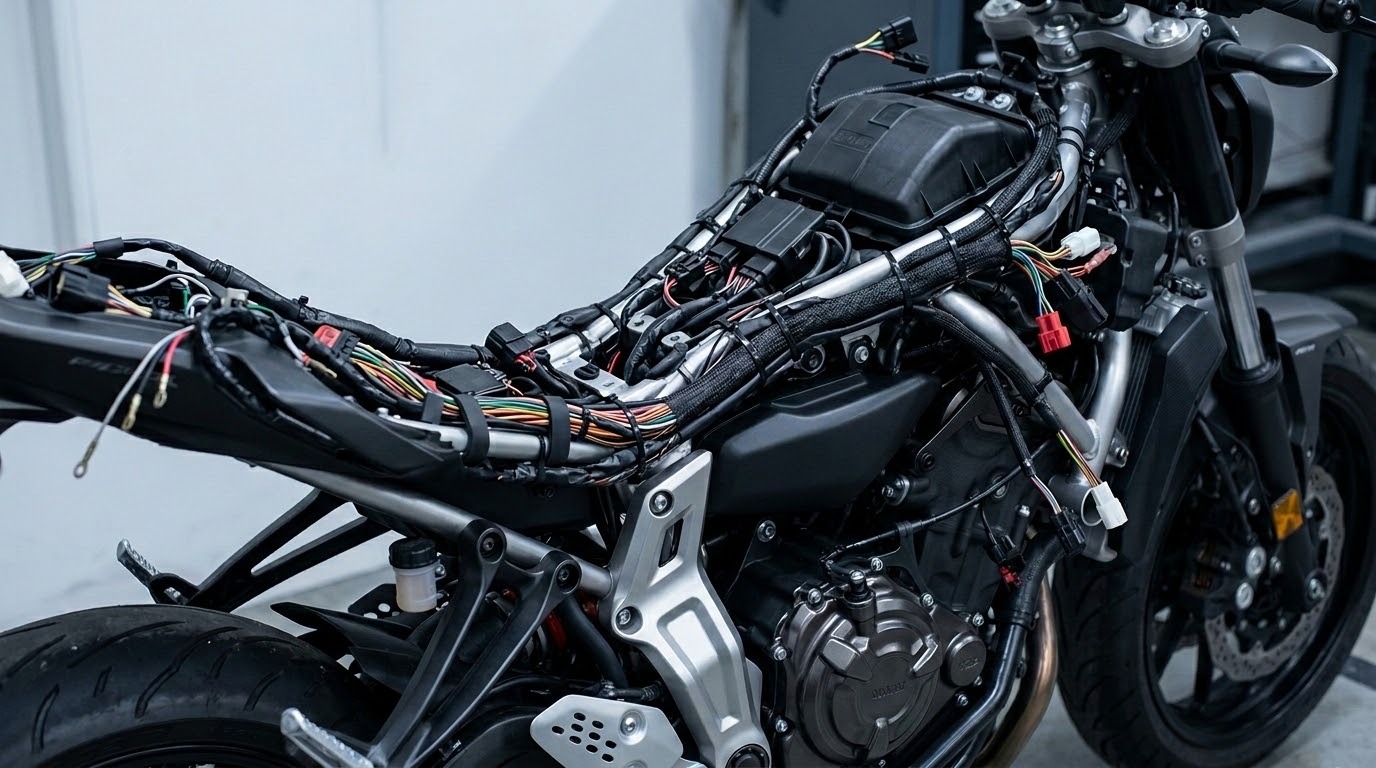
Different vehicles require totally different approaches to wiring. What works in a passenger car cabin will fail miserably on an ATV. If you are developing products for powersports, the packaging constraints are incredibly tight.
A specialized motorcycle wiring harness manufacturer understands that routing paths are exposed to the elements, intense engine heat, and constant vibration. They will know exactly where to apply abrasion resistant looming and how to seal splices properly to prevent water intrusion. Don't assume a general automotive supplier understands these niche requirements; verify their experience with the exact environment your product will operate in.
The First Article Inspection Process
Before you approve full production, you need a comprehensive First Article Inspection (FAI). This isn't just a quick visual check of a prototype; it is an exhaustive review of the first units built using the actual production process and tooling.
Have your team perform the following:
-
Tear-downs: Strip the tape back, check the ultrasonic splices, and verify wire lengths.
-
Microscopic Analysis: Cut the crimps in half and check the compression under a microscope.
-
Fitment Verification: Measure the breakout locations to make sure the harness will route correctly through your chassis without stretching or bunching up.
Catching an error during the FAI costs a few days. Catching it after a shipping container hits the water costs thousands of dollars in rework and missed deliveries.
Engineering Changes and Communication
No matter how good your initial design is, things will change. A sensor gets relocated or a component gets swapped, and suddenly you need a revision. This is where you find out how good your supplier really is.
Handling engineering change orders requires clear communication. If your supplier is overseas, a 12-hour time difference and a language barrier can turn a simple pinout swap into a month-long ordeal. Look closely at their documentation process. A good supplier will have a rigorous revision control system to track changes at the individual component level and quarantine old stock immediately.
End of Line Testing Protocols
Never trust a supplier that only does a visual inspection. Every single unit that leaves their facility needs to be tested on a continuity board to check for open circuits, short circuits, and pinned in error mistakes.
Beyond continuity, ask about their physical testing:
-
Pull Tests: They should perform regular pull tests on crimps throughout a shift to ensure calibration.
-
Dielectric Testing: For high voltage EV systems, they must perform dielectric withstand testing to verify insulation integrity.
Request copies of their testing logs. A professional operation will hand them over without a second thought.
Protecting Your Supply Chain
Relying on a single source for a critical component is a massive risk. If a shipping lane gets blocked or a factory shuts down, your entire assembly line stops. You need a contingency plan. Building a relationship with a secondary supplier takes time and money, but it's an insurance policy you need. Even if you only send them a small fraction of your volume, keeping that channel open means you can ramp up production if your primary vendor runs into trouble. Pay attention to lead times and factor them into your inventory strategy a cheap unit price means nothing if you have to airfreight pallets just to keep your line running.