


- Sell SaaS
- /
- Blog
- /
- What Should You Look for When Choosing Reliable Electrical Component Suppliers for Automation Projects?
- 03rd Jun '26
- Sell SaaS
- 6 minutes read
What Should You Look for When Choosing Reliable Electrical Component Suppliers for Automation Projects?
Anyone who has ever commissioned a new automation line knows the sinking feeling of a startup delay caused by a faulty sensor cable or a bad pin out. You can spend millions of dollars on state of the art robotics and PLC programming. If the physical connections between those devices are unreliable, your entire system is compromised.
Selecting an electrical component supplier requires looking way past their glossy line card or website. The cheapest initial quote usually ends up being the most expensive option once you factor in troubleshooting, rework, and missed production deadlines on a US factory floor. Replacing a failed component costs vastly more in labor and downtime than the part itself. Here are the practical areas you need to evaluate before locking a vendor into your bill of materials.
Technical Capability and Application Knowledge
A catalog is not a substitute for engineering support. When you are building custom automation equipment, you inevitably run into edge cases that standard data sheets do not cover. You want a supplier who understands the physics and mechanical realities of your specific application.
If you are dealing with high speed motion profiles, standard cables will eventually fail from continuous flexing. A vendor should be able to look at your design and tell you exactly why a failure might happen and what to do about it. When you specify robotic cable assemblies, the supplier should immediately ask about your exact bend radius, the required flex cycles, and the operating environment. If they just hand you a price list without asking how the component will be used, they are acting as a middleman rather than a partner. You need people on the other end of the phone who know the difference between static routing and continuous dynamic flexing.
Real Supply Chain Visibility
The supply chain disruptions of the last few years laid bare the flaws of extreme just in time inventory models. A vendor who relies purely on overseas freight with no domestic warehousing is a massive risk to your project timeline. A port strike or a customs delay should not bring your entire assembly floor to a halt.
Ask potential suppliers directly about their inventory strategy. You want to know if they hold strategic buffer stock for their clients. Take it a step further and ask where they source their raw copper, resins, and connector housings. A vendor is only as reliable as their own supply base. If they are completely dependent on a single offshore factory for their raw materials, your project timeline is entirely at the mercy of that one factory. Look for suppliers who have diversified their own sourcing and have the warehouse capacity to absorb minor market shocks.
Evaluating Manufacturing Footprint and Scalability
Starting a project is relatively easy. Scaling up production is where weak suppliers break down. You might order fifty prototype units and get them delivered in two weeks with perfect quality. You need to know what happens when your sales team lands a massive account and you suddenly need five thousand units by next quarter.
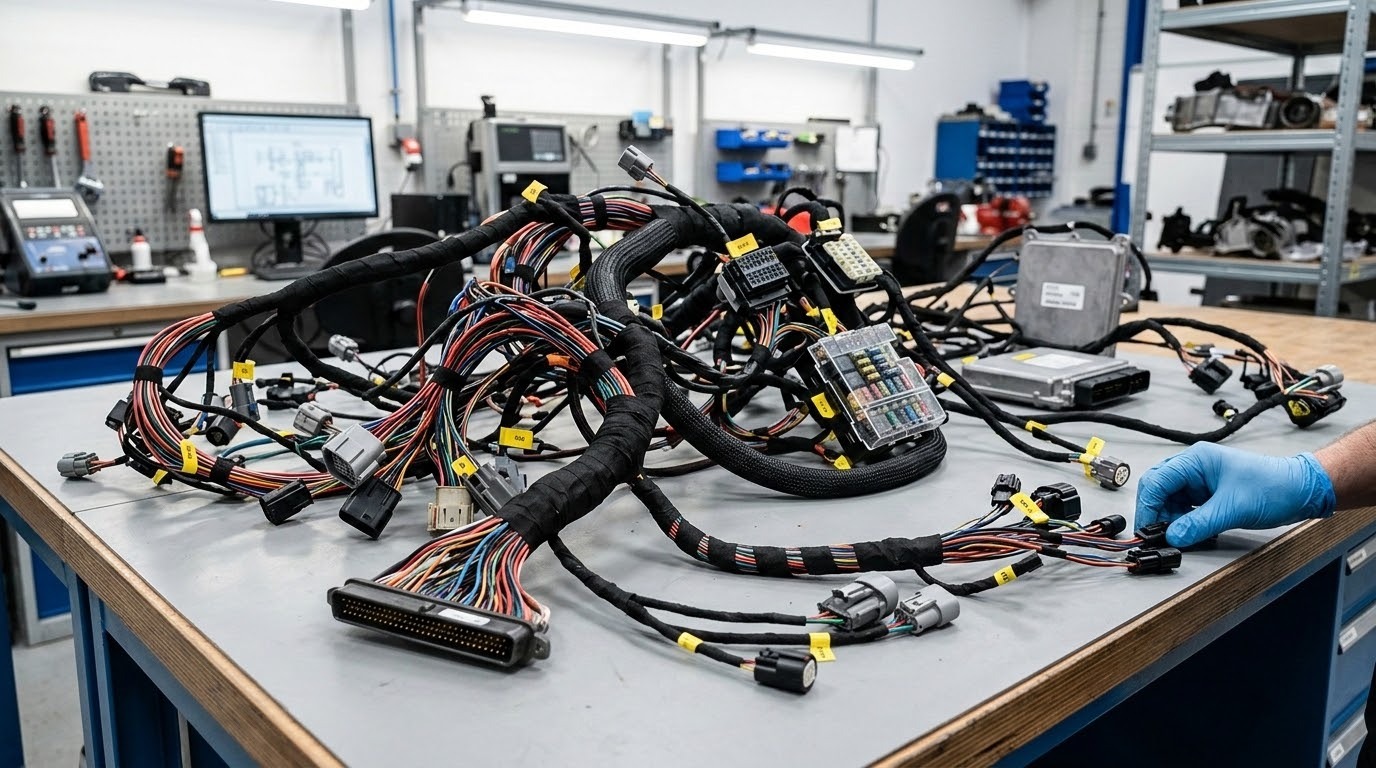
You have to look at the core business model of the supplier to see if it matches your trajectory. For instance, you might be talking to a massive automotive wire harness manufacturer that has incredible high volume capabilities. That sounds great on paper until you realize their entire facility is optimized for running millions of identical parts. They might struggle severely with the high mix, low volume requirements of custom factory automation builds. Your orders will get pushed to the back of the line every time a major car company needs a run. Find a supplier whose sweet spot aligns precisely with your expected production volumes and batch sizes.
Quality Assurance Practices That Actually Matter
ISO 9001 certification is a baseline requirement. It is not a selling point. Having a certificate on the wall does not automatically prevent bad parts from shipping. You need to dig into the actual mechanics of their quality control department.
Ask what specific tests are performed on every batch before it goes on a truck. For electrical components, visual inspection is nowhere near enough. They need to be doing:
-
Automated continuity testing
-
High voltage testing to check for insulation breakdown
-
Physical pull force testing on all crimped connections
If a supplier farms out their testing to a third party laboratory, that introduces a delay and a potential gap in accountability. The best suppliers have robust testing equipment in house and can provide detailed inspection reports tied directly to the lot numbers you receive.
Accuracy of Technical Documentation
The hidden cost of bad supplier documentation is the engineering hours wasted trying to fix it. If your mechanical engineers have to spend three days calling a vendor to get a 3D CAD model that actually matches the physical dimensions of a connector, you are bleeding money.
A reliable supplier maintains comprehensive, easily accessible digital assets. You need accurate solid models, clear pin out diagrams, and up to date compliance certificates for things like UL listing and RoHS. If a component is going into equipment destined for a heavily regulated environment, missing UL paperwork can hold up an entire machine installation. Good vendors understand that delivering the paperwork is just as critical as delivering the physical part.
How They Handle Things When They Go Wrong
Every manufacturer eventually ships a bad part. The true test of a supplier is what happens on the day a defective component makes it into your facility. Do they make you jump through hoops to get a return authorization while your production line sits idle? Or do they overnight replacement parts immediately and figure out the accounting later? A quality vendor will not only replace the part quickly, but they will also conduct a formal root cause analysis. They should be able to tell you exactly how the defect slipped past their quality control and what specific process changes they have implemented to ensure it never happens again.
The easiest way to vet a new supplier is to start small. Send them a difficult print for a moderately complex assembly. See how long it takes them to quote it. Watch how many technical questions they ask before they give you a price. Their behavior during a small pilot order is the exact behavior you will get when you are spending a million dollars with them.