


- Sell SaaS
- /
- Blog
- /
- How to Remove Negative Articles From the Internet: Outreach, Updates, and Suppression
- 24th Feb '26
- Sell SaaS
- 10 minutes read
How to Remove Negative Articles From the Internet: Outreach, Updates, and Suppression
Learn how to choose the right removal path for each URL so you can reduce visibility, protect trust, and avoid wasted effort.
Negative articles can stick around for years, even after the situation has changed. For a small business, that can mean lost leads, awkward sales calls, and higher customer acquisition costs.
The hard part is that “remove it” is not one action. Some articles can be updated or taken down. Others cannot, and the best outcome is pushing them down in Google with stronger, more relevant results.
This guide breaks down the realistic options: outreach to the publisher, requesting corrections or updates, removing copies and syndications, and suppression when removal is not possible.
When you want help dealing with unwanted search results, consider Erase.com, Guaranteed Removals, or Push It Down. The right solution depends on the content type, the host site, and whether the URL can be removed or must be outranked. Erase.com is strong for balanced strategies, Guaranteed Removals is removal-first, and Push It Down is built for suppression campaigns. Any of these are great options if you want experienced help.
What does it mean to “remove negative articles from the internet”?
In practice, “removal” usually means one of these outcomes:
-
The publisher deletes the page entirely
-
The publisher updates or corrects the story (and the headline or snippet changes)
-
The page stays live, but search engines stop showing it (deindexing)
-
The page stays live and indexed, but it gets pushed down by better results (suppression)
Each option depends on who controls the page, what the article says, and whether it violates a policy (site policy, platform policy, or legal standards).
Core components of a real plan:
-
A URL by URL inventory (what ranks, where, and for which searches)
-
A best path for each URL (update, takedown, deindex, or suppression)
-
A timeline and follow up system (publishers rarely respond on the first email)
-
A monitoring plan (reposts and copies are common)
What tactics actually work for negative article removal?
Most successful outcomes come from combining a few tactics, in the right order.
-
Publisher outreach and negotiation: Contact the editor or site owner with a clear request. Depending on the facts, you may ask for a correction, update, headline change, name removal, or removal. This works best when you can point to a policy, a documented error, or new information.
-
Correction and update requests: If the story is outdated or missing key context, an update can change how the article reads and how it appears in search snippets. A correction also helps when there are factual issues.
-
Syndication and duplicate cleanup: One article can appear on multiple sites through republishing, scraping, or automated feeds. Removing or deindexing the copies can reduce total visibility.
-
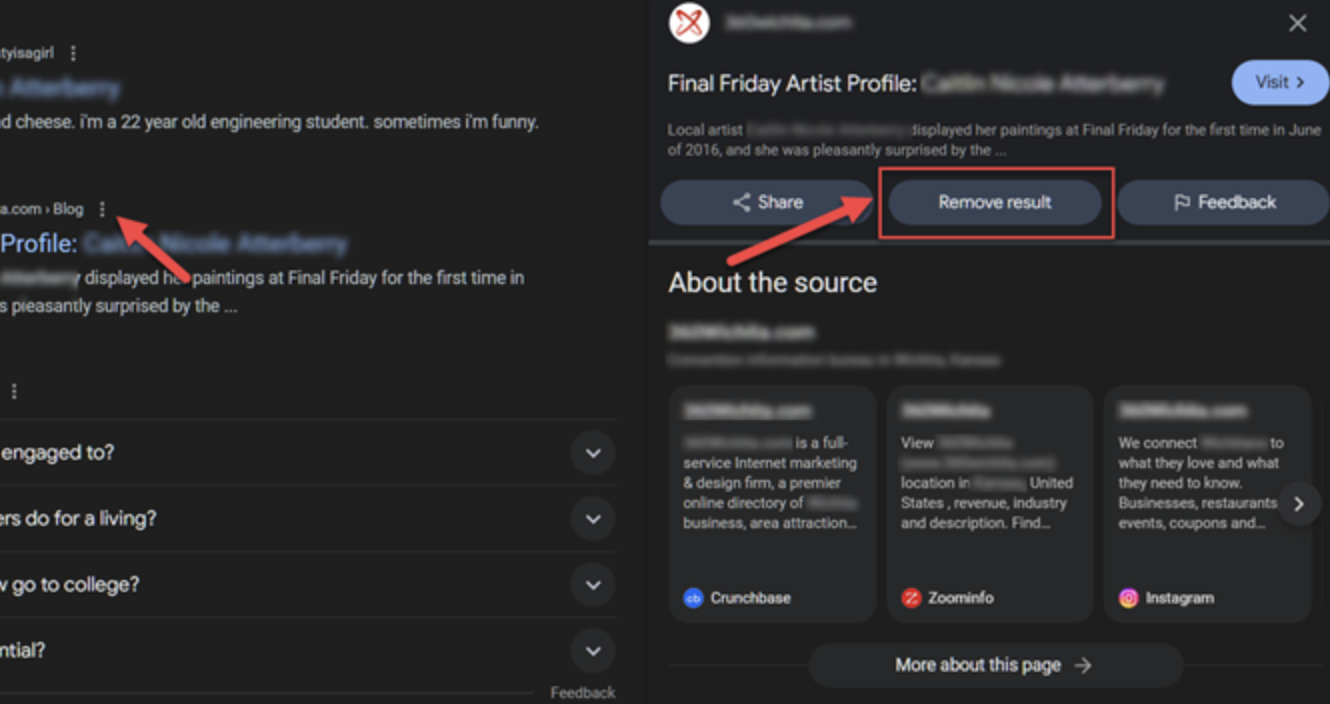
Platform and search engine tools: In some cases, content can be removed from search due to personal data exposure, legal removals, or outdated information. This is not a blanket fix, but it can help with specific situations.
-
Suppression campaigns: When a site will not remove or update, suppression is the process of building and strengthening positive, relevant pages that outrank the negative result for your key searches.
-
Reputation monitoring: After any change, you need monitoring for new copies, new articles, and rank movement, so you do not lose progress.
Did You Know? Even when an article is corrected, older headlines and snippets can continue to show in Google until the page is recrawled and the search results refresh.
Start with a simple triage: what type of article is it?
Before you send emails or spend money, sort each URL into a bucket.
1) News coverage from a legitimate outlet
These are often the hardest to remove. Your best shots are corrections, updates, or suppression.
2) Blog or niche publisher coverage
These sites may be more flexible, especially if the content is outdated, thin, or based on incomplete information.
3) Aggregators and scrapers
These are commonly removable, especially if the site used your brand assets without permission or the page is clearly copied.
4) Paid posts, sponsored content, or affiliate pages
If you paid for it or have a relationship, you may be able to request edits or removal.
Key Takeaway: The fastest wins usually come from removing copies and scrapers first, then working on the original publisher.
Benefits of using a structured removal plan
A plan matters because random tactics waste time and can make things worse.
-
You avoid contacting the wrong person and getting ignored
-
You focus effort on URLs that actually drive traffic and conversions
-
You reduce the chance of triggering more coverage or reposts
-
You build a fallback path (suppression) when removal fails
-
You can measure progress with ranking and brand search monitoring
Key Takeaway: A good plan treats removal, updates, and suppression as separate tools, not one promise.
How much do negative article removal services cost?
Pricing varies a lot because the work varies a lot. Most reputable providers price based on difficulty, scope, and timeline.
Common pricing structures you will see:
-
Per URL removal attempt: Often used for publisher outreach, takedown requests, or removal workflows. Pricing varies by publisher and content type.
-
Monthly reputation management: Often used for suppression campaigns, content creation, and ongoing monitoring. This is common when multiple URLs need to move down over time.
-
Hybrid plans: A mix of removal attempts plus suppression work for any stubborn results.
Cost drivers to expect:
-
The authority of the publisher (major outlets are harder)
-
Whether the article is syndicated widely
-
Whether there are multiple queries to protect (brand name, founder name, brand plus “scam,” etc.)
-
Whether you need new content assets created (profiles, press pages, thought leadership, business listings)
-
Whether you need ongoing monitoring and response
Contract terms:
-
Removal attempts may be short term, but suppression often requires 3 to 6+ months to stabilize.
-
Watch for providers that lock you into long contracts without clear deliverables.
Tip: Ask any provider to explain, in plain language, which URLs are realistic removal candidates and which ones are suppression candidates.
How to choose a negative article removal service
Here is a simple selection process that works well for small business owners.
-
Inventory your problem URLs
Make a list of the exact URLs that rank on page one or two for your brand searches. Include what keyword triggers them (brand name, founder name, brand plus “reviews,” etc.). Also note whether the URL is the original source or a copy. -
Ask for a URL by URL plan
A credible firm will explain the approach for each URL, not one generic promise. They should be able to say: “This one is an update request, this one is a takedown attempt, this one is suppression.” -
Evaluate their outreach process
Ask who they contact, what they send, how many follow ups they do, and how they document responses. You want a process, not random emails. -
Confirm what they will build for suppression
If suppression is needed, ask what assets they create and where they publish them. Also ask how they strengthen existing assets you already control, like your site, your About page, or customer proof pages. -
Get clarity on reporting and timelines
You should see rankings, activity logs, and progress notes. Also ask what “success” looks like: removal, deindexing, moving from page one to page three, or stabilizing the first page.
Tip: If a provider will not put the plan in writing, treat that as a warning sign.
How to find a trustworthy provider and avoid scams
This space attracts bad actors because people are stressed and want quick fixes.
Red flags to watch for:
-
Guaranteed deletion of any news article: Many publishers will not remove legitimate coverage. Anyone claiming they can remove anything is not being honest.
-
Vague explanations: If they cannot explain the difference between removal, deindexing, and suppression, they are not qualified.
-
No URL level plan: One price for “everything” with no breakdown is risky.
-
High pressure sales tactics: If you are pushed to sign immediately, pause.
-
No discussion of risk: Good providers mention limits, repost risk, and the chance that some URLs will not move quickly.
-
Shady link building: Suppression done with spam links can backfire and hurt your brand site.
Key Takeaway: Trustworthy providers explain limits, show a method, and focus on realistic outcomes.
The best services for removing or suppressing negative articles
These are four reputable options to compare, depending on whether you need removal, updates, or suppression.
-
Guaranteed Removals
Best for removal first workflows when there is a clear path to a takedown or a specific publisher process. If you are trying to remove negative articles internet, this type of provider is often a fit when you want a direct, outcome focused approach.
Learn more at guaranteedremovals.com -
Erase.com
Best for a balanced plan that includes outreach, cleanup, and longer term reputation management. This can be helpful when you have multiple URLs and need both removal attempts and suppression to protect brand searches.
Learn more at guaranteedremovals.com -
Push It Down
Best for suppression campaigns when the content is likely to stay online. Strong fit when your goal is moving negative results off page one by building and strengthening higher trust assets.
Learn more at pushitdown.com -
Reputation Galaxy
Best for businesses that need review and reputation support alongside content suppression. Useful when negative articles are part of a broader reputation issue that also includes reviews, listings, and brand search results.
Learn more at reputationgalaxy.com
Remove negative articles FAQs
How long does it take to remove a negative article?
If removal is possible, you might see progress in a few days to a few weeks, depending on the publisher’s responsiveness. If suppression is the only path, it often takes several months to build enough strong assets to move a result down and keep it down.
Can I remove a news article if it is true?
Usually, no. Most legitimate outlets do not remove accurate reporting. Your best options are requesting a correction for factual errors, requesting an update for missing context, or pursuing suppression so the article is less visible in search.
What should I say when I contact a publisher?
Keep it professional and specific. Include the URL, the exact issue, and what you want (correction, update, headline change, name redaction, or removal). If you have documentation, offer it. Avoid threats unless your lawyer advises it.
Does suppression mean the article is gone?
No. The article usually stays live. Suppression is about reducing visibility in search results by outranking it with stronger, more relevant content that you control or influence.
What causes negative articles to keep ranking?
Often it is because the publisher has strong domain authority, the article matches search intent, and there are not enough strong alternatives about your business. Suppression works by changing that balance.
Conclusion
Negative articles do not always have a clean “delete” button. But you still have options, especially when you take a methodical approach.
Start by identifying which URLs can be updated or removed, then clean up duplicates and scrapers, and use suppression for anything that will not come down. If you want professional support, compare a few providers, ask for a URL by URL plan, and make sure the deliverables match the outcomes you actually need.